
A caravan can look tidy on the drive yet still be difficult to value without knowing what sits behind the cushions and cupboard doors. The most valuable caravan features are usually the ones that make touring easier, safer and more comfortable – provided they are in good working order. For anyone considering a sale, understanding these details can help set realistic expectations and make the valuation process much clearer.
A useful feature will not always add the same amount to every caravan. Age, make, overall condition, layout and the current market all matter. However, certain extras consistently attract interest because they save the next owner time, expense or inconvenience.
1. A dry, well-maintained body
Before discussing optional extras, the caravan itself comes first. A dry interior, sound floor, clean seals and a roof free from damage will usually matter far more than any accessory. Damp, soft spots around windows, signs of water staining and delamination can reduce value because repairs are often costly and difficult to predict.
A recent damp report can give a buyer confidence, especially on a caravan that is several years old. It is not essential for every sale, but paperwork showing regular servicing and inspections is useful evidence that the caravan has been looked after.
Do not try to cover up damage or damp concerns. A straightforward description leads to a fairer, quicker decision than a surprise found during inspection.
2. A popular layout with useful sleeping space
Layout is one of the most valuable caravan features because it cannot be changed cheaply. Fixed single beds, an island bed, a spacious end washroom or a front lounge that converts into a large double can all appeal to different buyers.
Families may favour bunks and flexible seating. Couples often prefer fixed beds and a separate shower area. A caravan with a layout that suits a broad range of owners can be easier to sell, but a specialist layout is not automatically a disadvantage. It simply needs to reach the right buyer.
When preparing details for a valuation, be clear about the number of berths and where people sleep. Photographs that show the beds made up, rather than only the daytime seating arrangement, are particularly helpful.
3. A motor mover in working condition
A fitted motor mover is one of the extras many caravan owners actively look for. It makes positioning a caravan on a pitch, driveway or storage space much easier, particularly in tight spaces or on uneven ground. For owners who no longer want the physical effort of manoeuvring a caravan by hand, it can be a real selling point.
Its value depends on condition and operation. A mover that engages properly, responds to its remote and has a serviceable battery is more appealing than one that has not been used for years. If it is fitted but faulty, say so. It may still have value, but it should not be presented as a fully working extra.
4. Modern heating and hot water
Touring is not limited to high summer, particularly in Scotland and northern England. Reliable blown-air heating and hot water make a caravan more practical for spring, autumn and cooler evenings. A system that warms the caravan evenly and works as it should on gas and electric supply can make a noticeable difference to buyer interest.
A newer heating system is welcome, but usability matters more than the badge on the control panel. Demonstrating that the heating, water heater and controls work can remove uncertainty. Keep any manuals available too, as unfamiliar systems can put off a buyer when no instructions are included.
5. A well-equipped kitchen
A caravan kitchen does not need to resemble a kitchen at home, but the basics should be clean, functional and complete. A working cooker, grill, hob, fridge and microwave, where fitted, all support the caravan’s day-to-day appeal.
A large fridge freezer is especially useful for longer trips and family touring. Buyers will also notice practical details such as intact worktops, uncracked sink surrounds and cupboard catches that close properly. Small repairs in this area are often worth doing before selling because they improve the overall impression without needing a major spend.
6. An end washroom or proper shower
A separate washroom is high on many buyers’ wish lists. An end washroom can provide more privacy and storage, while a separate shower cubicle is generally more convenient than a combined wet-room style arrangement.
The condition of the washroom matters. Check for cracked shower trays, damaged seals, leaking taps and poor drainage. These are not always expensive faults, but they can suggest a lack of care if left unresolved. Clean the toilet cassette area thoroughly and make sure the flush works before anyone views or inspects the caravan.
7. Solar panels and an upgraded leisure battery
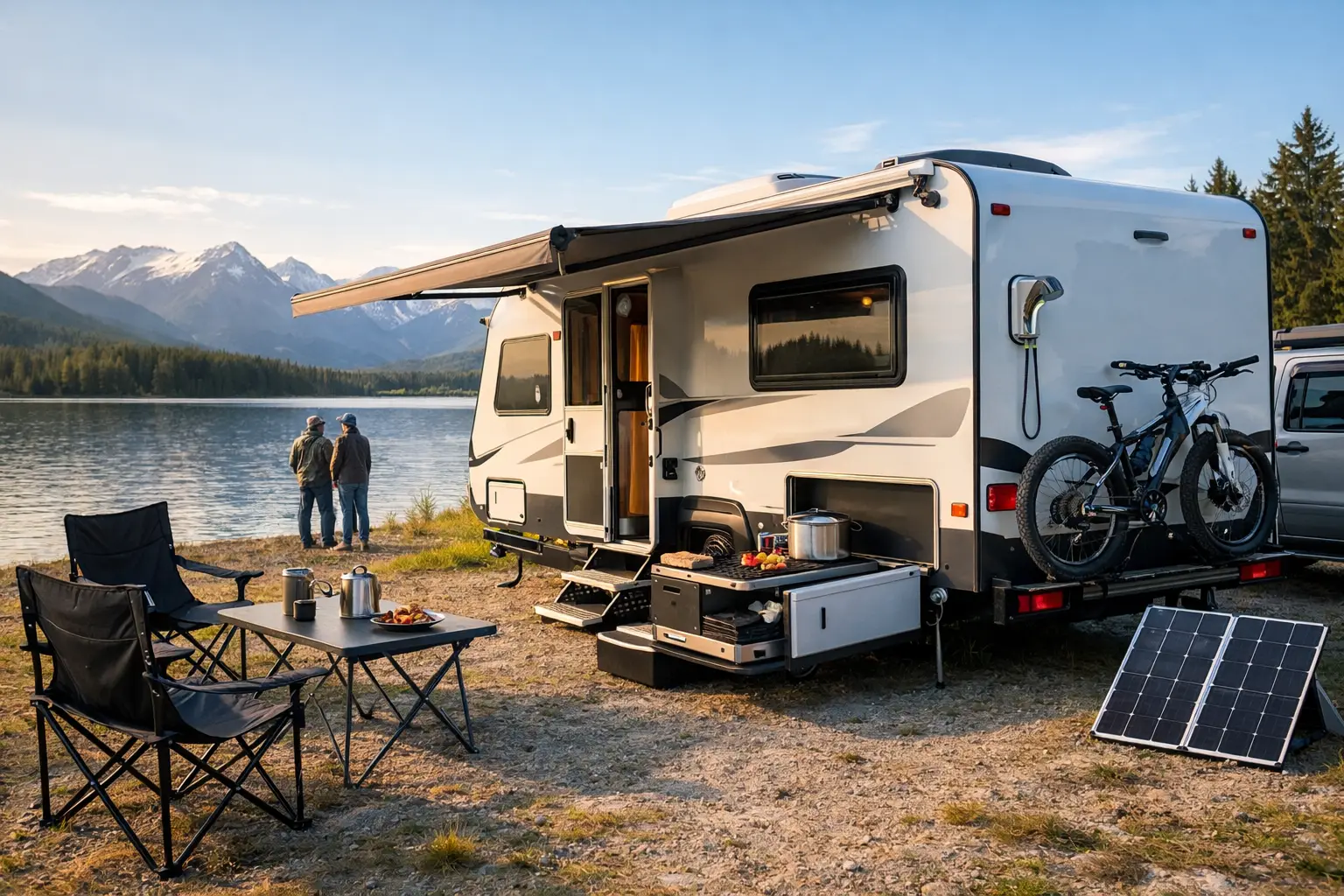
Solar panels have become increasingly useful for owners who enjoy quieter sites, rallies or trips without a mains hook-up. They can help maintain the leisure battery and reduce reliance on electric hook-up for lighting and basic 12-volt use.
This feature is more valuable when the installation is tidy and properly documented. A panel alone does not guarantee off-grid capability: battery age, charge controller quality and the condition of the caravan’s electrical system all play a part. Still, a sensible solar set-up can make a caravan stand out to touring buyers.
8. A quality awning and usable outdoor kit
A full awning can add practical living space and makes a caravan more versatile in changeable weather. Porch awnings are lighter and quicker to put up, which may suit weekend users. Either can be attractive if it is dry, complete and appropriate for the caravan.
An awning with missing poles, damaged fabric or an uncertain fit may have limited value. If you include one in the sale, state the make, size and condition honestly. Other useful items, such as breathable towing covers, steps, wheel locks and water carriers, can help make the package more appealing, although they rarely transform the price on their own.
9. Security equipment and clear ownership documents
Factory-fitted alarms, tracking systems, wheel locks and hitchlocks can reassure buyers. For a tracker to count as a genuine benefit, make sure the subscription position and transfer process are clear. A security device without keys, codes or proof of operation is less useful.
Documents are just as important. Keep the registration paperwork, service records, handbooks, manuals, spare keys and receipts together. A well-organised file helps confirm the caravan’s history and makes a buyer’s checks simpler. If finance is outstanding, be upfront about it. It does not necessarily prevent a sale, but it must be dealt with correctly.
10. Condition that matches the caravan’s age
A spotless, original caravan with a sensible service history will often appeal more than one full of poorly fitted upgrades. Buyers value confidence. They want to see clean upholstery, working blinds and flyscreens, undamaged windows, sound tyres and a caravan that has clearly been stored carefully.
That does not mean an older caravan must be perfect to sell. Wear is expected, and many buyers are happy to take on cosmetic jobs at the right price. The key is an honest account of its condition. Knowing which repairs are cosmetic and which affect use or safety makes any valuation more accurate.
Preparing valuable caravan features for a valuation
Before asking for a price, give the caravan a basic clean and gather the details a buyer will need: make, model, year, berth, layout, service history, known faults and any fitted extras. Test the appliances if practical, charge the leisure battery and take clear photographs in daylight.
Avoid spending heavily on upgrades purely to sell. A new awning, expensive television or cosmetic refurbishment may not return its full cost. Maintenance and minor repairs are usually a better use of money, especially where they show the caravan is safe, dry and ready for its next owner.
At Connors Caravans, a fair valuation is based on the full picture, not a checklist of extras. Age and condition remain central, but features such as a motor mover, solar panel, desirable layout and a strong service record can all support the offer.
The simplest approach is to be open from the start. Share the good features, mention any faults and keep your paperwork close by. That gives you the best chance of a quick, straightforward sale with no wasted time.