
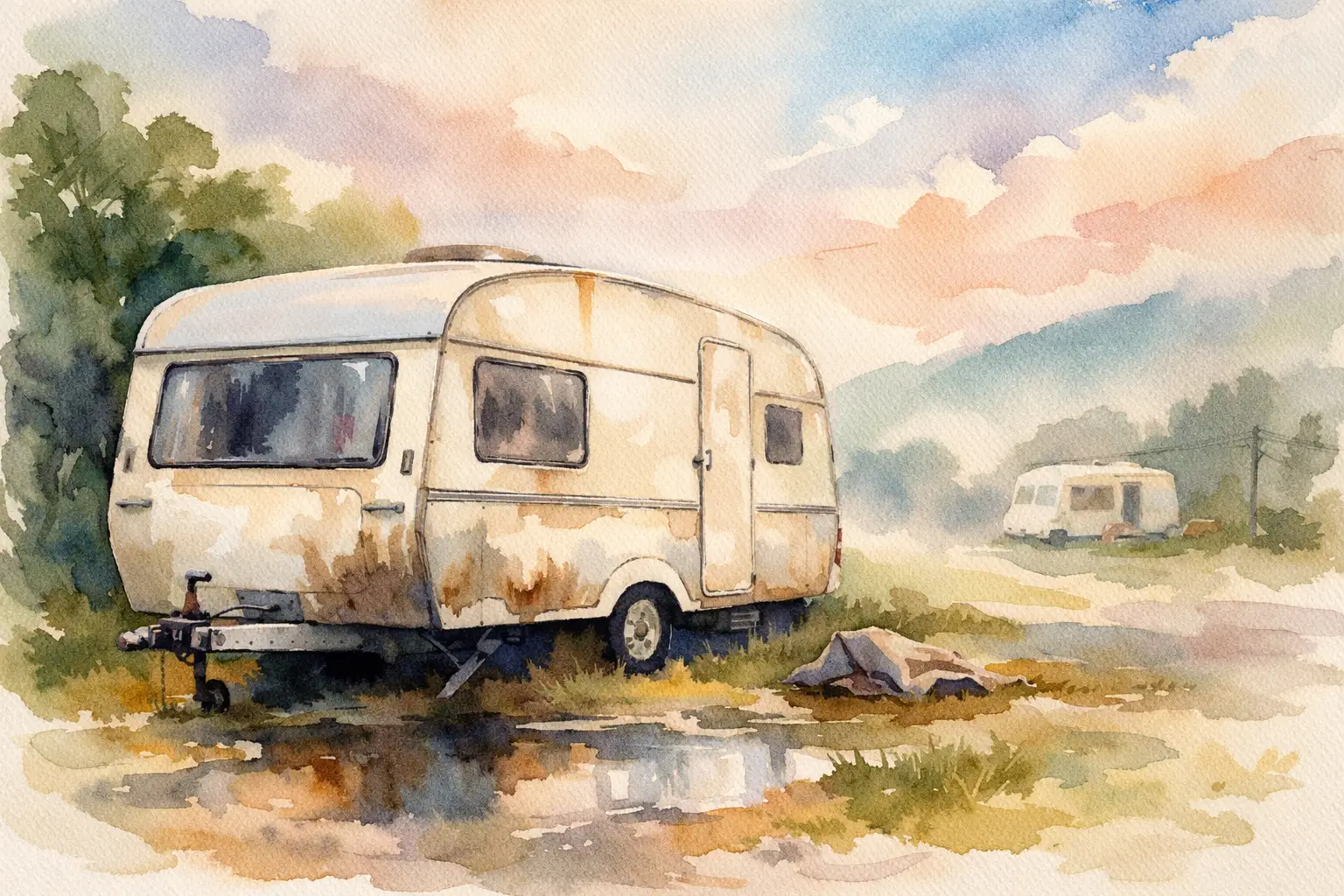
A damp patch beside a window, a soft floor near the door or a musty smell in a locker can make selling feel like a non-starter. But can you sell a caravan with damp damage? Yes. Caravans with damp still have a market, provided you are upfront about their condition and realistic about the price.
For many owners, the real question is whether to spend money on repairs first or sell the caravan as it stands. The right answer depends on the extent of the damp, the age and value of the caravan, and how quickly you need a straightforward sale.
Can you sell a caravan with damp damage legally?
You can sell a caravan with damp damage, but you must not misrepresent its condition. If you know about damp, water ingress, soft walls, floor damage or previous repairs, be clear about it with a potential buyer. Do not cover stains, mask smells or describe the caravan as dry if it is not.
Private sales are generally based on the buyer inspecting the caravan and making their own decision. However, being honest protects both sides and avoids disputes after the sale. If a buyer asks whether the caravan has damp, answer truthfully. If you have had a damp report, repair estimate or previous water ingress work carried out, keep the paperwork available.
Selling to a professional caravan buyer can be simpler. An experienced buyer will assess the caravan’s overall condition, age, make, layout and likely repair costs, then make an offer based on the facts. There is no need to pretend a problem is not there.
How damp affects a caravan’s value
Damp can reduce value significantly, but it does not automatically make a caravan worthless. The impact varies widely. A small, localised issue around a damaged seal is very different from widespread water ingress affecting walls, roof timbers, floor structure and internal fittings.
Buyers will usually consider where the damp is, how severe it is and whether the source of the leak is known. They will also look at whether the caravan is structurally sound, towable and complete. A well-known make with a popular layout, good tyres and usable appliances may still be worth buying even where repairs are needed.
Age matters too. Spending several thousand pounds repairing an older caravan does not always increase its resale price by the same amount. On a newer, higher-value model, professional repairs and a clean damp report may make financial sense. On an older tourer, selling as seen to a buyer who understands repair work can be the more sensible route.
Signs a buyer will take seriously
Damp is not always obvious from one quick look, which is why knowledgeable buyers check carefully. Common warning signs include a musty smell, staining around windows or rooflights, bubbling wallboard, soft panels, loose wallpaper, damaged sealant and a spongy floor.
A damp meter reading can help show the extent of the issue, although high readings need proper interpretation. Moisture may be present around fittings or seals without meaning the entire caravan needs rebuilding. Equally, a caravan that looks tidy can hide more serious damage behind furniture or wall coverings.
If you are unsure how bad the problem is, a professional damp inspection can give you useful clarity. It may also help you decide whether to repair, sell as it is or simply adjust your expected price.
Should you repair damp before selling?
Repairs can be worthwhile when the caravan is relatively new, desirable and otherwise in very good condition. A properly completed repair that identifies and fixes the water entry point can make the caravan easier to sell. Keep invoices, photographs and any post-repair damp check, as buyers will want confidence that the cause has been dealt with rather than hidden.
However, repairs are not always the best investment. Damp work can be labour-intensive because affected panels, insulation, timber and fittings may need removing before the caravan can be rebuilt. Once work begins, the true extent of the damage can be greater than first expected.
Before authorising expensive work, compare the repair estimate with the caravan’s likely value once repaired. Consider the time involved as well. If the caravan has been sitting unused, you need the space back, or you simply do not want the uncertainty of a repair project, selling it in its current condition may be the better choice.
How to sell a damp caravan honestly and quickly
Start by gathering the basic details: make, model, registration year, length, layout, service history, ownership documents and any evidence of damp or repairs. Take clear photographs of the caravan inside and out, including the affected areas. Accurate information makes a valuation fairer and avoids wasted time later.
Be specific when describing the issue. Saying there is “some damp” without explaining where it is can lead to confusion. A clearer description would state that there is a soft patch by the front window, staining around a rooflight, or a damp floor corner near the washroom. You do not need to diagnose every technical cause, but you should share what you know.
Private selling may attract buyers looking for a project, but it can take time. You may need to arrange viewings, answer repeated questions, negotiate heavily and deal with people who change their mind after travelling to see it. Damp often makes private buyers more cautious, so an advertised price needs to reflect the condition from the outset.
A direct sale to a specialist buyer offers a different route. The buyer can assess the caravan, account for the damage in the offer and arrange collection once a price is agreed. This is often useful if the caravan is no longer safe or practical to tow, or if you want to avoid advertising a vehicle that needs work.
Connors Caravans buys caravans in a range of conditions, including those with damp, damage and outstanding finance. A clear description of the issue helps ensure the valuation is realistic, transparent and free from last-minute surprises.
What not to do when selling a caravan with damp
Trying to hide damp usually creates more trouble than it saves. Fresh paint, air freshener, new sealant over damaged areas or strategically placed cushions may make a caravan look better for a viewing, but they do not resolve the problem. An experienced buyer is likely to spot warning signs, and trust disappears quickly if the condition has been disguised.
It is also wise not to assume every damp issue is a cheap reseal. The visible mark may be some distance from where water entered, and damage can spread inside the wall or floor structure. If you do not know the cause, say so rather than making promises that cannot be supported.
Finally, do not price the caravan against dry, immaculate examples of the same model. Check expectations against its actual condition. A fair, realistic price is more likely to bring a serious buyer than an inflated advert that sits unanswered for months.
A fair sale starts with a clear picture
A caravan with damp damage can still be sold, and for the right buyer it may be a worthwhile repair project or source of usable parts. The key is to be open about the issue, understand how it affects the value and choose a selling route that suits your circumstances.
If repairing it will cost more time and money than you are comfortable with, there is no shame in selling it as it stands. A straightforward valuation based on the real condition gives you certainty and lets you move on without the hassle of trying to make an imperfect caravan look perfect.