
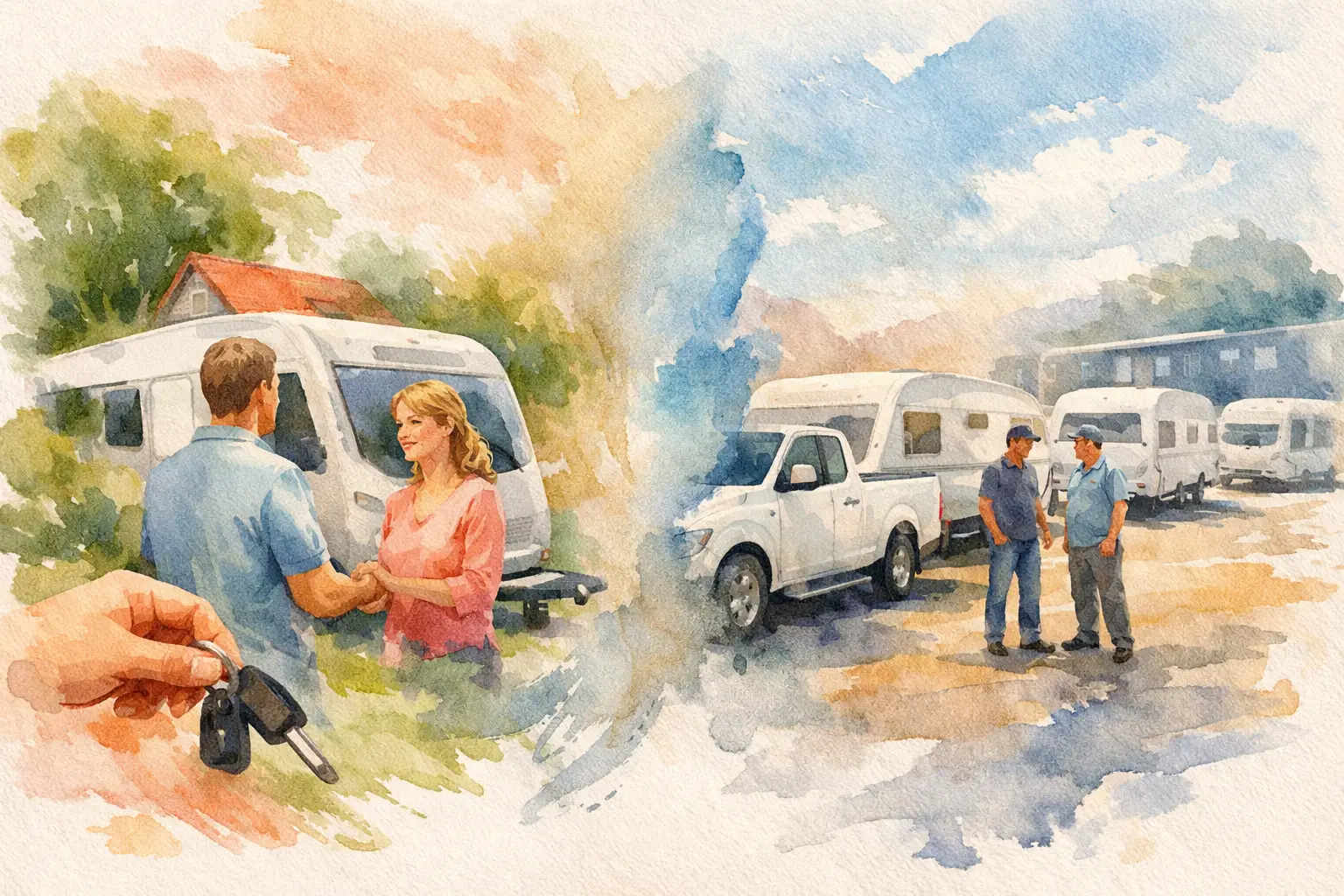
A caravan that is sitting unused on the drive still needs insuring, maintaining and protecting from the weather. Once you have decided to sell, the question becomes practical: private sale vs caravan buying company: which is better? The right answer depends on what matters most to you – achieving the highest possible figure, or getting a fair offer without weeks of messages, viewings and uncertainty.
A private sale can work well for the right caravan and the right seller. But it is not simply a case of placing an advert and waiting for the money to arrive. Selling to a specialist caravan buying company offers a different route: a direct valuation, a clear decision and collection arranged once the deal is agreed.
Private sale vs caravan buying company: the key difference
With a private sale, you advertise the caravan yourself, set an asking price and deal directly with prospective buyers. You control the process, but you also take responsibility for every part of it. That includes preparing the caravan, taking photographs, answering enquiries, arranging viewings, negotiating and checking payment before handover.
A caravan buying company purchases the vehicle directly from you. Rather than finding a retail buyer, you provide the caravan details and receive an offer based on its age, make, model, condition and current market demand. If the offer suits you, payment and collection can be arranged without you needing to advertise or host viewings.
Neither option is automatically better for every owner. The deciding factor is usually the balance between price, time and hassle.
Can you get more money by selling privately?
Potentially, yes. A private buyer may pay more than a professional buyer because they are purchasing the caravan to use themselves. They may be willing to pay closer to the advertised retail price, especially for a popular, well-presented model with a full service history and desirable extras.
However, an asking price is not the same as the final amount you receive. Private adverts often attract offers below the figure you had in mind. A caravan may also take longer to sell than expected, particularly outside the main buying season or if similar models are widely available locally.
It is worth being realistic about the costs attached to waiting. You may continue paying for storage, insurance and servicing while the caravan is advertised. If it is stored at home, it takes up space. If it has a damp issue, cosmetic damage or a repair that needs attention, a private buyer may reduce their offer after viewing or walk away altogether.
A buying company will normally offer less than the highest private-sale price because it must cover collection, preparation, resale costs and market risk. In return, you receive certainty. For many owners, particularly those selling after a change in circumstances, that certainty has real value.
The real work involved in a private caravan sale
Private selling is often worthwhile when you have time, patience and a caravan that is easy to market. It is less appealing when you need a quick sale or simply do not want strangers visiting your home.
Before advertising, you should clean the caravan thoroughly, remove personal belongings and gather the paperwork. Good photographs matter, as does an honest description that covers condition, servicing, ownership and any faults. You will then need to respond promptly to calls and messages, many of which may lead nowhere.
Viewings bring another consideration. Buyers often want to inspect every cupboard, test appliances, look underneath the caravan and ask detailed questions about towing, damp checks and repairs. Serious buyers are welcome, but you may also encounter timewasters, last-minute cancellations or people hoping to negotiate heavily on your doorstep.
Payment needs care too. Do not release the caravan, keys or documents until funds have cleared and you are satisfied the payment is genuine. A buyer who pressures you to act quickly, wants to pay in an unusual way or suggests complicated arrangements should be treated cautiously.
When a caravan buying company is the better choice
Selling direct is usually the better option when convenience and a straightforward outcome matter more than holding out for the very highest possible price.
It can be particularly useful if the caravan is no longer used, you are buying a newer model, dealing with a bereavement, moving house or freeing up money for another priority. It is also a practical route when the caravan has wear and tear, accidental damage or faults that make a private sale more difficult.
A reputable specialist buyer should explain how the valuation is reached and make the process clear from the outset. You should know what is being offered, whether collection is included and when payment will be made. There should be no pressure to accept an offer that does not feel right.
At Connors Caravans, owners can request a free, no-obligation valuation for caravans, motorhomes and campervans. Once a sale is agreed, payment and collection are arranged, helping sellers across southern Scotland and northern England avoid the usual advertising and viewing process.
What about caravans with damage or outstanding finance?
This is where a direct buyer can be especially helpful. Private buyers often prefer a caravan with no obvious issues and may be put off by repairs, signs of damp, bodywork damage or appliances that need attention. That can leave you facing a choice between spending money on repairs or accepting a much lower offer after weeks of advertising.
Specialist buyers are used to assessing vehicles in a range of conditions. Be open about any known issues when requesting a valuation. Accurate information helps produce a fairer offer and prevents surprises later in the process.
Outstanding finance does not always stop a sale, but it must be handled properly. You need to know the settlement figure from your finance provider and make sure the finance is cleared as part of the transaction. Never assume that a buyer will take responsibility for it without a clear agreement. A professional buyer can explain the process and help ensure the paperwork is dealt with correctly.
How to decide which route suits you
Start by asking how quickly you need the caravan sold. If there is no deadline, the caravan is in excellent condition and you are comfortable managing enquiries and negotiations, a private sale may give you the opportunity to achieve more.
If you want a firm decision quickly, do not want visitors at your property or would rather avoid arranging collection, a caravan buying company is likely to be the more suitable option. It is also sensible if the caravan is difficult to sell privately due to age, condition or an outstanding finance balance.
The best approach is to get a realistic private-sale estimate and compare it with a direct-buying offer. Then consider the gap in price alongside the time, effort and risk involved. A slightly higher private price can lose its appeal if it takes months to achieve, requires expensive repairs or falls through at the final stage.
Get the details ready before you ask for a valuation
Whether you sell privately or direct to a buyer, having clear information to hand will make the process quicker. The make, model, year, layout, registration details, service records, habitation checks and details of any accessories all help establish value.
Be honest about condition. A clean caravan with tidy paperwork is easier to assess, but there is no need to hide age-related marks or known faults. Straightforward information leads to straightforward offers and avoids wasted time for everyone.
Selling your caravan should feel like a decision you are in control of, not a long-running chore. If a quick, fair and professionally managed sale would make life easier, requesting a no-obligation valuation is a sensible place to start.