
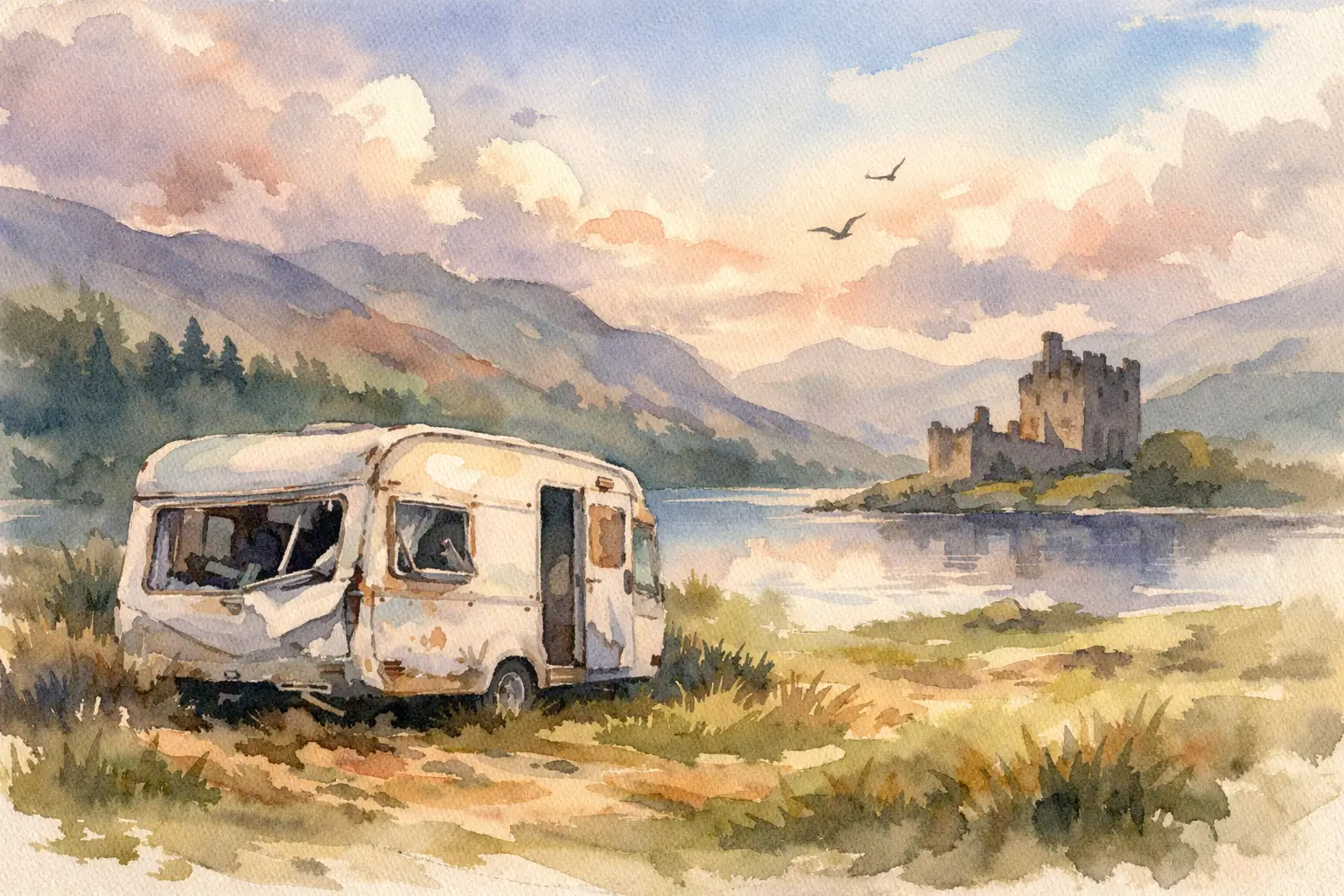
A damaged caravan can sit on the drive for months while you weigh up what to do next. Repairing it may not make financial sense, private buyers often lose interest the moment they hear the word damage, and part exchange offers can be disappointing. If you need to sell damaged caravan Scotland owners often find the quickest route is to deal directly with a specialist buyer who understands condition issues and can still make a fair offer.
Why damaged caravans are harder to sell privately
Most private buyers are looking for something ready to tow away and use straight away. Even minor issues such as damp, panel damage, cracked windows, soft flooring or cosmetic wear can put people off. Once a caravan has visible faults, sellers usually face the same problems – time wasters, low offers, repeated viewings and endless questions.
There is also the issue of trust. A private buyer may worry about hidden faults, previous repairs or the cost of putting things right. That makes negotiations longer and more awkward than they need to be. If your caravan has been standing unused after an accident, storm damage or long-term wear, the last thing you usually want is a drawn-out sale.
Sell damaged caravan Scotland – what buyers actually look at
Damage does not automatically make a caravan unsellable. It simply changes how it is valued. A specialist buyer will usually look at the make, model, age, overall condition and the type of damage involved, then balance that against resale, repair or salvage potential.
Cosmetic damage is one thing. Structural damage, water ingress, floor delamination or major panel impact is another. Some faults are relatively straightforward to price, while others need a closer look because repair costs can vary. This is why honest information matters from the start. If you describe the caravan clearly, you are far more likely to get a realistic offer quickly.
Paperwork can also make a difference. Service history, ownership details and any record of previous repairs help a buyer assess the caravan properly. Missing paperwork does not always stop a sale, but complete details tend to make the process smoother.
When selling as-is makes more sense than repairing
Owners often ask whether they should repair the caravan first or sell it in its current condition. The honest answer is that it depends on the extent of the damage, the age of the caravan and what the repairs are likely to cost.
If a caravan is newer and the damage is minor, repairs may improve its value enough to justify the expense. But if it has damp, body damage, a weakened floor or several issues at once, you can quickly spend more than you gain back. That is especially true with older caravans where even a tidy repair bill may not lift the final sale price by much.
Selling as-is removes that uncertainty. You are not paying out up front, waiting for workshop availability or hoping private buyers see past the faults. For many owners, certainty matters more than squeezing every possible pound from the sale.
The simplest way to sell a damaged caravan
The easiest process is usually the one with the fewest moving parts. Rather than advertising, arranging viewings and negotiating with strangers, you provide the caravan details to a direct buyer, receive a valuation and decide whether the offer works for you.
A proper buying service should make this straightforward. You tell them the make, model, year and condition, mention any known issues and send photos if requested. From there, you should get a clear offer with no pressure. If you accept, payment and collection are arranged without you needing to chase transport or deal with uncertain buyers.
That matters even more when the caravan is not roadworthy, has been damaged in storage or is simply too much trouble to move privately. A direct buyer takes on the practical side of the sale so you do not have to.
What to prepare before you sell damaged caravan in Scotland
You do not need a perfect caravan to get a valuation, but a few simple steps can speed things up. Start with the basics. Note the registration if applicable, model, year, layout and any extras. Then be clear about the faults. Damp readings, cracked panels, damaged windows, axle issues, accident damage or signs of previous leaks should all be mentioned.
Good photos help. Clear images of the outside, the interior and the damaged areas give a buyer enough detail to price sensibly. It also reduces the risk of a revised offer later because expectations are set properly from the start.
If you have finance outstanding, say so early. That does not always prevent a sale. Specialist buyers often deal with caravans that still have finance attached, but the figures need to be checked and handled correctly.
It also helps to gather any keys, manuals and service records. Again, these are not always essential, but they make the handover cleaner and easier.
Fair pricing matters – even for damaged stock
A lot of sellers worry that admitting damage means they will be offered next to nothing. That can happen with the wrong buyer, especially if they use the condition as a reason to chip away at the price after turning up. A professional buyer should be more straightforward than that.
Fair pricing does not mean pretending the damage is irrelevant. It means valuing the caravan honestly, based on its real condition and current market demand. Some makes and models still have strong value even when they need work. Others may be worth less because parts, age or repair costs make them harder to move on. The key is transparency.
That is why many owners prefer dealing with an experienced specialist rather than testing the private market first. A proper offer saves wasted time and gives you a realistic figure to work with.
Collection and payment should be simple
Once a price is agreed, the rest of the sale should not become a headache. If the caravan is damaged, towing it yourself may not be practical. Collection arranged by the buyer is often the safest and simplest option, particularly for owners in rural parts of Scotland where transport can be awkward to sort out at short notice.
Fast payment matters just as much. Most sellers are not looking for a complicated process with hidden charges or delays. They want to know what they will be paid, when they will be paid and who is handling collection. That level of clarity makes all the difference.
A company such as Connors Caravans is built around exactly that sort of direct service – fair offers, quick decisions, prompt payment and arranged collection without the usual back and forth.
Common types of damaged caravans buyers will still consider
Many owners assume the damage has to be minor for anyone to be interested. That is not always the case. Specialist buyers will often consider caravans with damp issues, accident damage, storm damage, delamination, cosmetic wear, faulty appliances, broken windows or units that have been off the road for some time.
The offer will depend on severity, of course. A caravan with a small area of panel damage is a different proposition from one with extensive water ingress. But both can still be saleable. The important thing is giving an accurate picture rather than trying to soften the details.
That honesty protects everyone. It helps the buyer quote properly and helps you avoid wasted time.
Why speed and certainty matter to most sellers
When a caravan is damaged, it rarely becomes more convenient with time. It takes up space, may continue to deteriorate and can become a constant reminder of an unfinished job. For some owners, it is tied to a change in plans, ill health, a bereavement or a simple decision that touring days are over. In those situations, a quick and respectful sale matters more than dragging things out.
That is why direct buying appeals to so many people. You are not waiting to see if an advert works. You are not fielding messages from people who want a bargain but never turn up. You are dealing with a buyer who knows the market, understands damaged stock and can make a clear decision.
If your caravan has seen better days, there is still a practical way forward. A fair valuation, a straightforward offer and arranged collection can turn a difficult sale into a simple one. Sometimes the best result is not holding out for a perfect buyer – it is choosing the route that gets the caravan sold and lets you move on.