
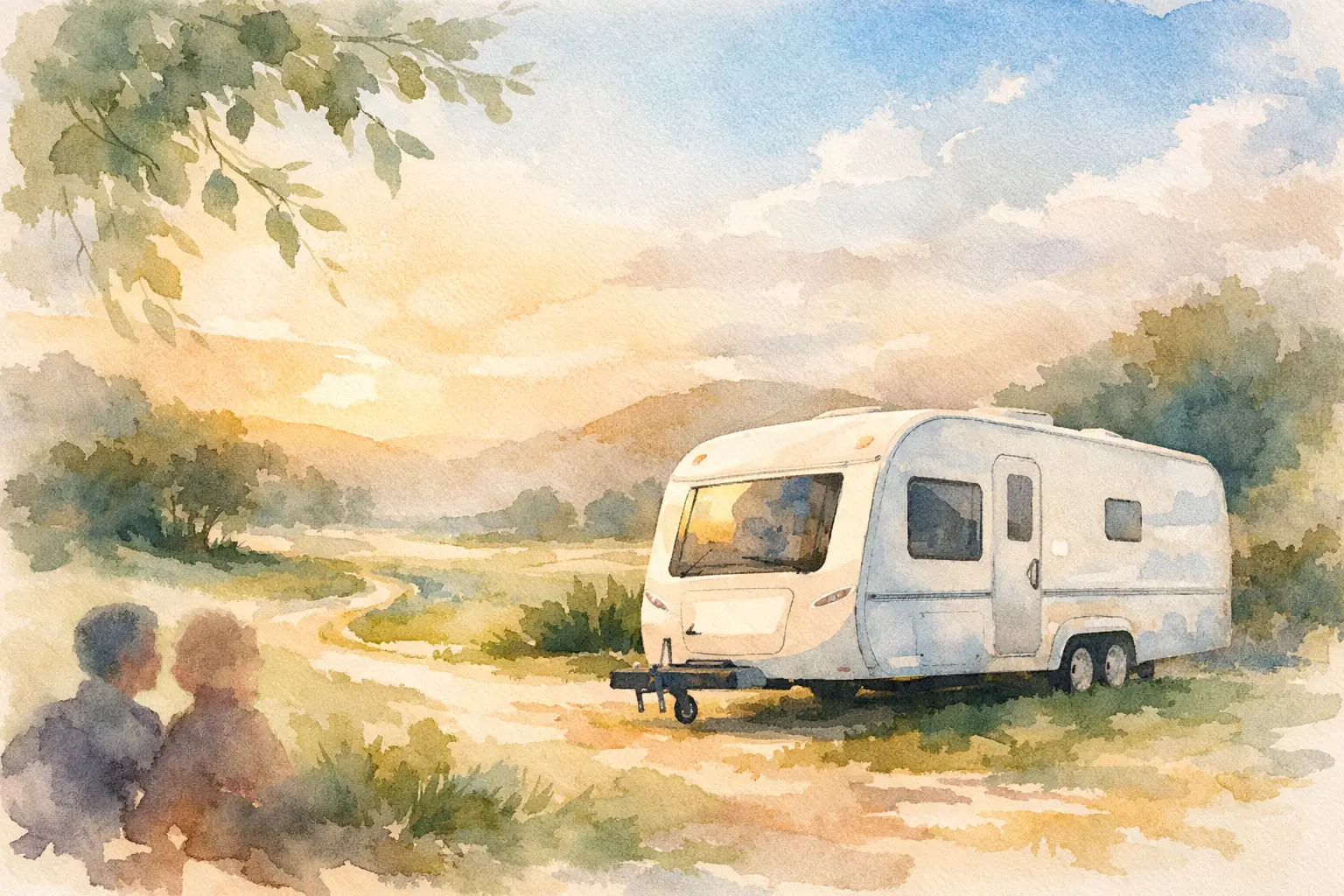
A caravan sitting unused on the drive tends to become one of those jobs that never quite gets done. You mean to photograph it, write an advert, answer messages and arrange viewings, but weeks pass and it is still there. If you want to sell caravan without advertising, there is a much simpler route – and for many owners, it is the better one.
Private selling works for some people, but it also comes with effort, delay and uncertainty. You need to decide where to list it, how to price it, how to deal with enquiries and what to do when buyers start chipping away at the figure. If you would rather avoid all that, selling directly to a specialist buyer can save a great deal of time and stress.
Why people choose to sell caravan without advertising
Most owners are not trying to become part-time caravan dealers. They simply want to turn a vehicle they no longer use into money in the bank, with as little fuss as possible. That is often the real reason people look for a way to sell caravan without advertising.
Sometimes the caravan has been sitting for months and you just want the space back. Sometimes health, retirement, family changes or the cost of storage means it no longer makes sense to keep it. In other cases, people are upgrading and do not want the hassle of juggling a sale at the same time.
Advertising sounds straightforward until you start doing it. Good photos take time. Honest descriptions matter. Messages arrive at all hours. Some buyers ask endless questions, some arrange to come and never turn up, and some appear keen until they see the caravan and start negotiating hard. Even a genuine buyer can leave you waiting on finance, transport or a change of heart.
That is the main trade-off. Selling privately might achieve a higher figure in some cases, but it usually demands more work and more patience. If speed, certainty and convenience matter more, a direct sale often makes better sense.
What the alternative looks like
If you choose not to advertise, the usual alternative is to sell directly to a specialist caravan buyer. Rather than listing the caravan and waiting for interest, you provide the details once and receive an offer based on age, make, model, condition and current market demand.
A proper direct-buying service is designed to keep things straightforward. You give the basic information, the buyer reviews it, an offer is made and, if you are happy, the rest of the process is arranged for you. That can include collection and fast payment, which is a major reason people prefer this route.
This is particularly useful if the caravan is not in perfect condition. Private buyers often expect a showroom-standard example for a private-sale price. A specialist buyer is usually more realistic. Wear and tear, cosmetic damage, damp issues or even outstanding finance do not automatically stop a sale. They simply affect the valuation.
How to sell caravan without advertising and still get a fair price
The biggest concern for most sellers is obvious – if I do not advertise it, will I still get a fair price?
The answer depends on who you deal with and how realistic your expectations are. A fair price is not always the highest possible number on paper. It is the figure you receive without paying in time, inconvenience, storage costs, repeat viewings or last-minute haggling.
A specialist buyer will usually base an offer on live market knowledge. That means looking at what similar caravans are actually selling for, not just what people are asking in adverts. There is an important difference there. Asking prices can be optimistic. Real sale prices are what matter.
You can help yourself by being accurate from the start. Give the correct make, model, year and layout. Mention any motor mover, awning, service history or upgrades that add value. Just as importantly, be honest about faults. A clear, truthful description helps produce a realistic offer and avoids problems later in the process.
If you are unsure whether the offer is right, compare it with the effort involved in selling privately. Think about cleaning, photographing, listing, taking calls, arranging viewings, dealing with no-shows and waiting for payment. For many sellers, the value of avoiding all that is considerable.
When a direct buyer makes the most sense
There are times when selling without advertising is not just convenient but the obvious choice.
If you need to sell quickly, a direct buyer is usually the better option. Advertising can take days or weeks before you even find an interested person, and that is before negotiations begin. A direct sale can move much faster.
If the caravan has faults or damage, private buyers can be difficult. Many expect a bargain and then try to push the price down further when they arrive. A specialist buyer is more likely to assess the caravan properly and make a practical offer based on its condition.
If you live in a rural area, the appeal is even clearer. Owners across Scotland and northern England are often dealing with long distances, limited local demand and the inconvenience of repeated viewings. In that situation, arranged collection is not a small benefit – it can be the reason the sale happens at all.
It also makes sense if you simply do not want strangers visiting your home. That alone is enough for some people to rule out private advertising.
What information you will usually need
Selling directly is simple, but the better the information you provide, the smoother it tends to be.
You will normally be asked for the caravan’s registration or VIN details if applicable, the make and model, year, condition and your location. Photos are often helpful, especially of the outside, seating area, kitchen, washroom and any areas of damage.
Documents matter as well. Service records, manuals, proof of ownership and finance information, if there is any outstanding balance, all help the process move along. Missing paperwork does not always stop a sale, but it is best to mention it early.
Accuracy is what protects both sides. If the caravan is described properly from the outset, the offer is more likely to reflect the final sale figure.
Common concerns about selling without advertising
Some owners worry that a direct buyer will automatically offer too little. Others assume the process sounds too easy to be genuine. Both concerns are understandable.
The key is dealing with an established buyer who is clear about the process and transparent about valuation. You should know what happens next, when payment is made and whether collection is included. If anything feels vague, ask questions.
Another concern is finance. Many owners are surprised to learn that a caravan with outstanding finance can still often be sold. The settlement figure simply needs to be taken into account. A specialist buyer will normally explain how that works rather than leaving you to sort it out alone.
People also ask whether damaged caravans can be sold this way. Often, yes. Not every unit will attract the same price, of course, but damage does not automatically make it unsellable. In fact, this is one area where advertising privately can be especially frustrating, because buyers tend to enquire without fully understanding the condition.
A simpler route for busy owners
For many people, the appeal of a direct buyer is not just speed. It is the removal of hassle at every stage.
You are not writing adverts. You are not waiting for messages. You are not tidying the caravan for multiple viewings or trying to judge whether a buyer is serious. You are dealing with one experienced buyer, one clear offer and one agreed process.
That is why this route suits so many private owners, especially those who value certainty over chasing the last possible pound. If the aim is to sell cleanly, quickly and with minimum disruption, advertising is often the part they are happiest to skip.
A specialist business such as Connors Caravans can make that process even easier by offering a no-obligation valuation, quick decisions, prompt payment and collection arranged around you. For sellers who want a straightforward answer rather than a drawn-out sale, that is often exactly what is needed.
If your caravan is no longer being used, there is no rule that says you must photograph it, list it and spend weeks fielding enquiries. Sometimes the smartest way to move on is the simplest one – get a fair offer, deal with a proper buyer and let the caravan go without the usual hassle.