
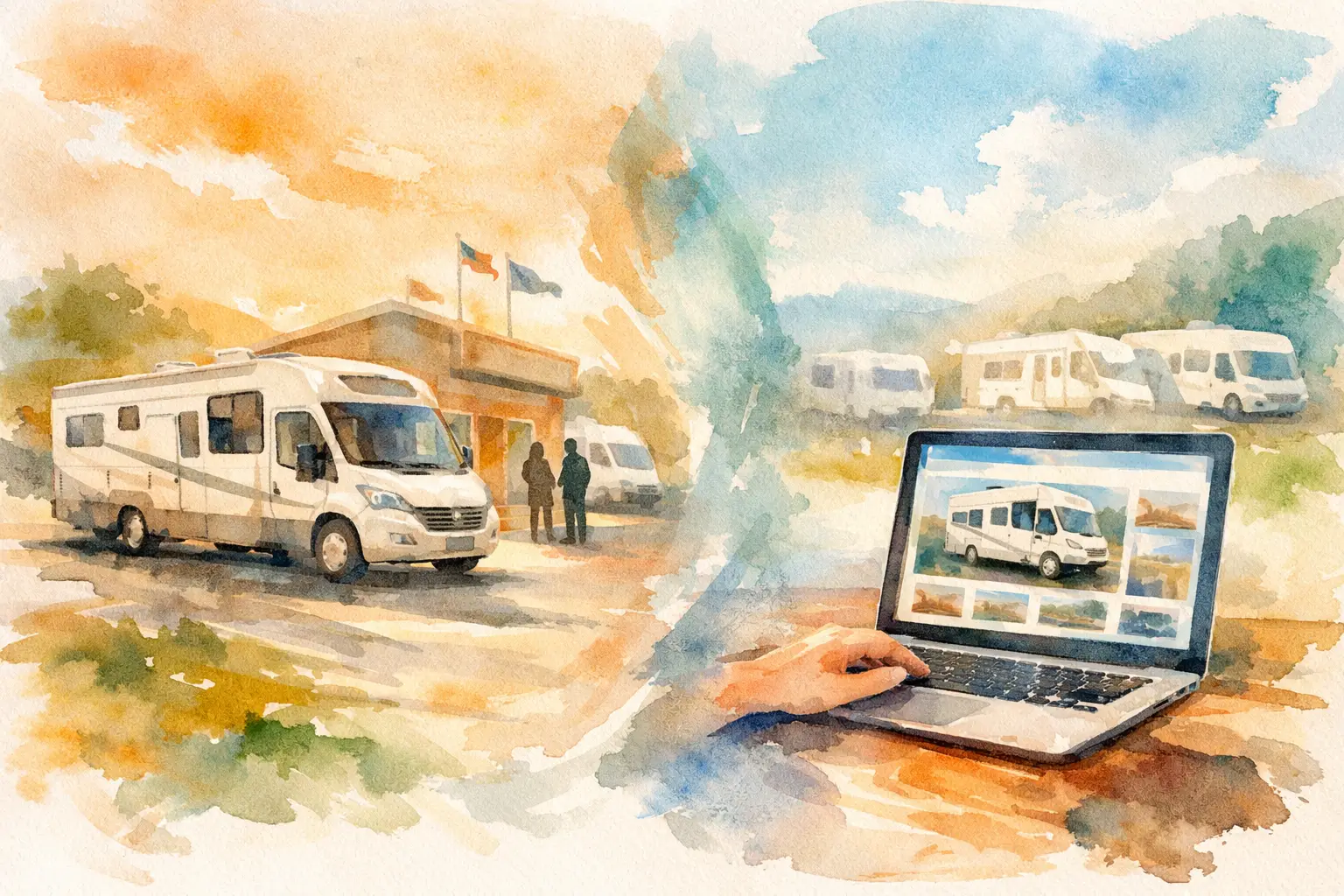
If you are trying to sell a motorhome, the question usually comes down to this: motorhome dealer or online marketplace? On paper, both can get the job done. In real life, they suit very different sellers. The right choice depends on how quickly you want to sell, how much effort you are willing to put in, and how much uncertainty you can tolerate.
For some owners, getting the last possible pound matters most. For others, avoiding timewasters, arranging viewings and wondering whether payment will actually arrive is enough to make a direct sale far more appealing. That is why it helps to look past the headline price and focus on the full picture.
Motorhome dealer or online marketplace: what is the real difference?
A dealer buys the vehicle from you directly. That means you provide the details, receive an offer, agree the sale if it works for you, and the buyer handles payment and collection. It is a straightforward transaction.
An online marketplace is different. It gives you a place to advertise your motorhome, but you still have to do the selling yourself. You need to create the advert, answer enquiries, take calls, arrange viewings, deal with negotiation and manage the paperwork. The platform provides exposure, not certainty.
That distinction matters more than many sellers first realise. A marketplace can look attractive because it appears to open the door to a higher asking price. But an asking price is not the same as money in your bank. With a direct buyer, you are looking at a firm route to sale rather than a listing that may or may not produce a serious purchaser.
When an online marketplace makes sense
There are situations where a marketplace is a reasonable option. If your motorhome is in strong condition, well presented, sensibly priced and in a popular layout, you may attract genuine interest. If you are not in a rush and are comfortable dealing with strangers, you might decide the extra effort is worth it.
It can also suit sellers who know the market well and are happy handling negotiation themselves. Some owners enjoy the process and feel confident filtering buyers, discussing specifications and standing firm on price.
But that route is rarely as simple as it sounds. Good adverts take time. Serious buyers ask detailed questions. Viewings often happen in evenings or weekends. And not every person who sounds keen on the phone turns up when promised.
There is also the issue of pressure. Private sellers can find themselves haggling on the driveway with someone pointing out every scratch, service gap or worn tyre to chip the price down. Even when the sale goes through, it can take far more time and effort than expected.
Why many sellers prefer a motorhome dealer
A dealer is usually the better fit when speed and certainty matter. If the motorhome is underused, taking up space, or simply no longer part of your plans, a direct buyer removes a lot of friction. You do not need to prepare a sales pitch or keep responding to messages for weeks.
That is especially helpful if the vehicle is not perfect. Wear and tear, cosmetic marks, damp concerns, bodywork issues or outstanding finance can make private selling more difficult. A private buyer often wants something ready to use with minimal compromise. A specialist buyer looks at the whole vehicle in a more practical way.
This is where experience counts. A proper buyer understands market values, seasonal demand and what affects resale. That often means a fairer conversation from the start, not an inflated promise followed by a lower figure later.
For many owners, the biggest benefit is simply knowing where they stand. You get an offer, a decision and a clear next step. No relisting. No repeated viewings. No waiting to see if the right person eventually appears.
Price matters – but so does the net result
The biggest argument in favour of a marketplace is price. It is true that a private sale can sometimes achieve more than a dealer purchase price. But sometimes is the key word.
To get that better figure, the vehicle usually needs to be clean, well photographed, accurately described and priced properly. Then you need the right buyer at the right time. If the advert goes stale, you may end up reducing the price anyway. Add in listing fees, valeting, minor repairs, fuel for meetings and the value of your time, and the gap can narrow quickly.
With a dealer, you may not achieve the absolute top-end retail number, but that figure was never yours to begin with. Retail prices reflect warranty provision, preparation, overheads and the fact that a business is reselling for profit. What matters to most private owners is the real-world result: what you receive, how quickly you receive it, and how much hassle it takes to get there.
A fast, fair offer can be better value than a higher advertised price that drags on for weeks and still ends in negotiation.
Safety, payment and peace of mind
This is the part many sellers think about only after they list. Selling a motorhome privately means inviting strangers to inspect a high-value vehicle, often at your home. Most enquiries are harmless, but not all are serious. Some are simply curious. Some are looking for a bargain. A few may raise genuine concerns around security and payment.
Handling deposits, bank transfers and handover arrangements can feel uncomfortable if you do not do this sort of thing often. You also need confidence that the buyer understands what they are purchasing and that the paperwork is completed properly.
A direct sale to a reputable motorhome buyer removes much of that uncertainty. The process is clearer, the payment method is agreed in advance, and collection arrangements are usually part of the service. For sellers who want a clean, professional transaction, that can be worth a great deal.
Motorhome dealer or online marketplace for older or damaged vehicles
If your vehicle is older, has cosmetic damage, signs of damp, mechanical faults or outstanding finance, the answer often becomes more straightforward. A marketplace can still work, but the pool of buyers is smaller and the selling process is usually harder.
Private buyers tend to be cautious with problem vehicles. They may expect a substantial discount, ask for repeated inspections or pull out entirely when they see the condition in person. You can spend a lot of time explaining issues that a trade buyer would assess quickly.
A specialist dealer is often the practical option here because they are used to buying vehicles in all sorts of condition. That does not mean every vehicle gets the same price. It does mean the conversation is grounded in market reality. If there is finance to settle, or repairs that put off private buyers, a direct buyer can often still move matters forward.
That is one reason sellers across Scotland and northern England often choose a specialist purchase service rather than trying to manage a difficult private sale on their own.
Which route suits your situation?
If you have time, patience and a vehicle that will photograph and present well, a marketplace may be worth trying. It offers reach, and if everything lines up, you may achieve a stronger price. But you need to be realistic about the work involved and the chance that the sale takes longer than planned.
If you want speed, less hassle and a clear outcome, a dealer is usually the better route. That is particularly true if the motorhome is older, has faults, has finance outstanding or you simply do not want strangers coming to view it.
Neither route is automatically right for everyone. The best choice depends on what you value most. Some sellers will chase maximum price. Many others want a fair price, fast payment and the confidence that once the deal is agreed, the sale is actually done.
That is why businesses such as Connors Caravans exist. For owners who would rather skip the uncertainty of classified ads and sell directly to an experienced buyer, the appeal is simple: a fair offer, a quick decision and no unnecessary fuss.
Before you choose, ask yourself one honest question. Are you trying to squeeze out every last pound, or are you trying to sell your motorhome properly, without the stress? Your answer will usually tell you whether a motorhome dealer or online marketplace is the better fit.