
A caravan that has been sitting on the drive for a season can still be worth good money, but buyers will notice its condition within seconds. Knowing how to prepare a caravan for sale means focusing on the details that give confidence: a clean interior, honest paperwork and a clear account of its condition. You do not need to spend a fortune making it perfect. The aim is to present it properly, avoid surprises and make the sale straightforward.
Start with a realistic view of its condition
Before reaching for the polish, walk around the caravan as if you were seeing it for the first time. Look at the panels, windows, tyres, towing gear, awning rails and exterior locker doors. Inside, check every cupboard, cushion, light, tap, blind and appliance you can safely test.
Make a note of anything that is worn, damaged or not working as expected. Small issues are common on used caravans and do not automatically prevent a sale. Damp, damaged bodywork, ageing tyres, missing keys or a faulty fridge can all affect the value, but being upfront saves time and builds trust. Trying to hide a problem usually leads to difficult negotiations later or a buyer walking away.
If you are unsure about an issue, do not guess. Describe what you know: for example, that there is staining near a window, that the water pump has not been tested recently, or that a corner panel has a dent. A professional buyer can assess the caravan fairly from there.
Clean it well, but do not over-restore it
A thorough clean is one of the simplest ways to improve first impressions. Start by removing all personal belongings, food, bedding, toiletries, children’s items and touring equipment. Empty the cupboards, under-seat storage and external lockers. Buyers need to see the storage space and imagine using the caravan themselves.
Vacuum the carpets and upholstery, wipe hard surfaces, clean the windows and wash the floor. Pay particular attention to the kitchen, washroom and fridge, where lingering smells can make an otherwise tidy caravan feel neglected. Open the windows for a while if the weather allows, and use a mild cleaner rather than heavily scented products that may appear to cover up damp or pet odours.
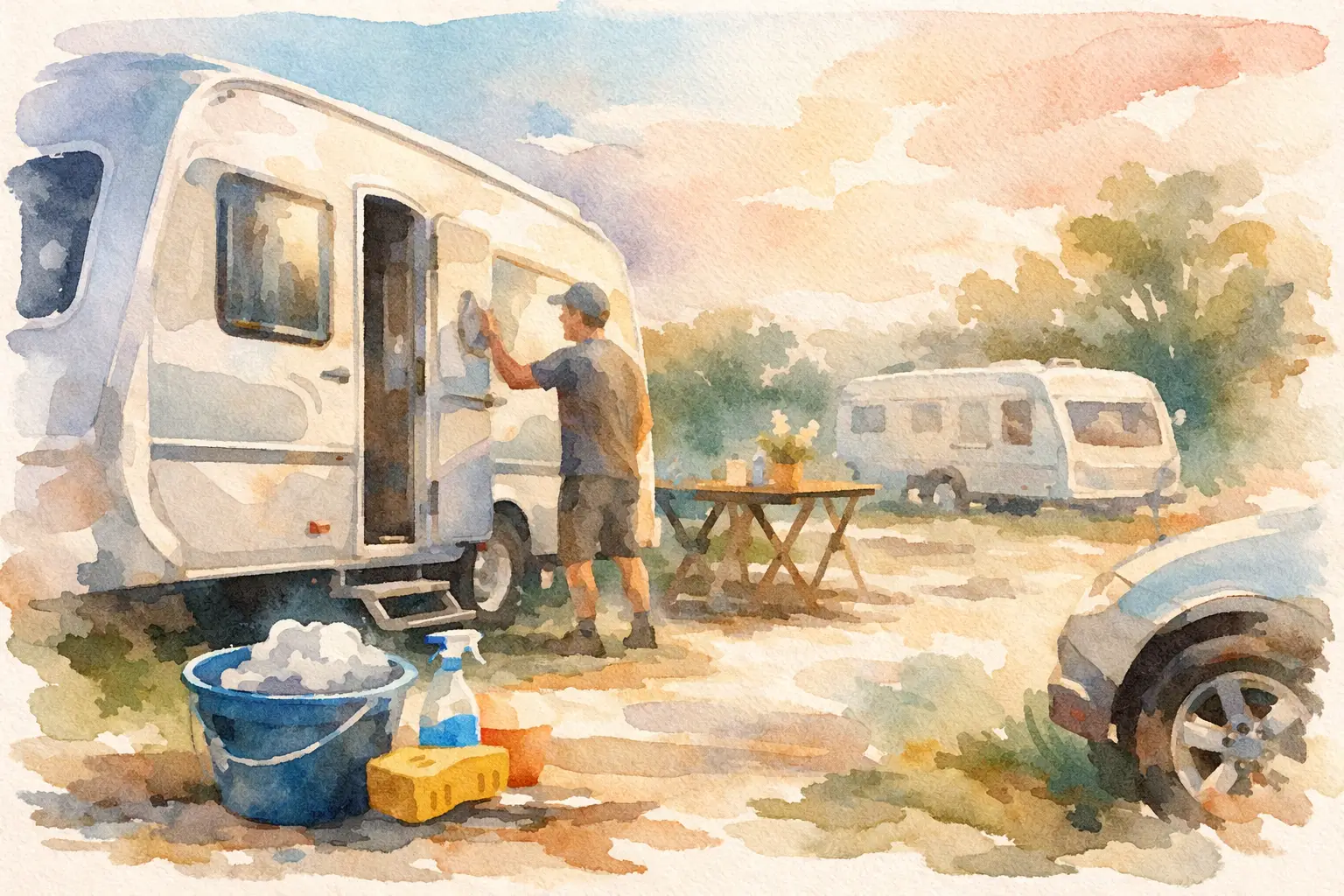
Outside, wash off road dirt, algae and grime from the bodywork, roof edges and wheel arches. Clean the front locker, jockey wheel and hitch area. A gentle wash is normally enough. Avoid aggressive pressure washing around seals, windows, vents and decals, as forcing water into vulnerable areas can create problems rather than solve them.
There is a sensible limit to preparation. Replacing a broken cupboard catch or fitting a new light bulb may be worthwhile. Spending hundreds of pounds on cosmetic upgrades shortly before selling often is not. The right decision depends on the caravan’s age, value and the cost of the repair. If it needs major work, a direct buyer may still be the easier route.
Deal with obvious odours and signs of damp
Musty smells deserve attention, but honesty matters more than air freshener. Remove wet textiles, clean the washroom, empty waste containers and let the caravan air out. If you know there has been damp, say so clearly rather than attempting a temporary cosmetic fix.
Damp checks are a normal part of buying a used caravan. Evidence of water ingress can reduce the offer, yet it is far better to establish that early than arrange a sale that cannot proceed. Keep any service records or past repair invoices that explain what work has been carried out.
Gather the paperwork before you ask for a price
Having the documents to hand makes valuation quicker and gives the buyer confidence that the caravan is genuinely yours to sell. Find the handbook pack, service history, instruction manuals, alarm or tracker information and receipts for major repairs or accessories.
The caravan’s CRiS registration document is particularly useful. CRiS, the Central Registration and Identification Scheme, helps identify many UK touring caravans and records the caravan identification number. If you have it, have the document ready. If it is missing, do not panic, but mention this when discussing the sale.
You should also locate any keys, including spare sets, wheel-lock keys, hitch-lock keys and keys for external lockers. A missing wheel-lock key can be inconvenient and may reduce what a buyer can offer, especially if the lock is still fitted.
If there is outstanding finance, be clear about it from the beginning. It does not necessarily stop you selling the caravan. The important thing is that the finance settlement figure is accurate and that the lender’s interest can be cleared correctly as part of the transaction. A reputable buyer will explain what information they need and will not ask you to ignore the finance agreement.
Check the practical items buyers notice
You do not need a full workshop inspection to sell, but a basic check avoids preventable questions. Inflate the tyres to the recommended pressure if they are serviceable, and look for obvious cracking or damage. Check that the handbrake releases, the jockey wheel operates and the hitch is accessible.
Inside, switch on the mains electricity only if it is safe to do so and you know the system is connected correctly. Test the lights, taps, toilet flush and appliances where possible. If gas cylinders are included, check their condition and state clearly whether they are part of the sale. Never carry out gas or electrical repairs unless you are qualified to do so.
Remove valuable personal accessories you plan to keep. This might include a television, portable satellite kit, battery, towing mirrors or camping furniture. At the same time, decide whether included items such as an awning, motor mover, solar panel or leisure battery add genuine value. Mentioning these accurately can support a stronger valuation, particularly when you can provide manuals, remotes and proof of purchase.
Take clear photographs and give accurate details
If you plan to advertise privately, good photographs are essential. Take them in daylight with the caravan clean, level and easy to view. Photograph both sides, the front and rear, lounge, kitchen, washroom, bedrooms, control panel, tyres and any useful extras. Include close-ups of faults rather than hoping they will go unnoticed.
For a direct sale, photographs also help the buyer give a more informed initial valuation. Alongside the images, provide the make, model, year, layout, berth, overall condition, service history and any known faults. The caravan identification number may also be requested to verify the vehicle.
Be careful with the year. The model year, registration paperwork and the date you bought the caravan can differ. If you are uncertain, say so. Accurate information helps a buyer make a fair decision and reduces the chance of a revised offer at collection.
Set a fair expectation on price
Owners naturally remember what they paid, the holidays they enjoyed and the cost of added extras. Those things matter to you, but the current market is driven by age, make, condition, layout, season, demand and the cost of repairs. A clean, well-kept caravan with paperwork and a good service record will generally attract more interest than a cheaper one with unanswered questions.
Private selling can sometimes achieve a higher headline price, but it also involves advertising, enquiries, viewings, negotiation and the risk of buyers failing to turn up. You may also need somewhere safe to keep the caravan while it is advertised. A direct buyer’s offer may reflect the convenience of a quick, certain sale with payment and collection arranged.
If speed and simplicity matter, Connors Caravans can provide a free, no-obligation valuation for caravans in a wide range of conditions. There is no need to spend weeks answering messages or preparing for viewings. Give an honest description, share the relevant details and decide whether the offer works for you.
Prepare for collection or handover
Once a price is agreed, remove everything you intend to keep. Check the cupboards one final time, including the front locker, under-seat areas and washroom cabinets. Put all keys, documents, manuals and accessories being included in one clearly labelled folder or bag.
Make sure the caravan is accessible for collection. If it is on a tight driveway, behind a locked gate or stored at a site, tell the buyer in advance. Confirm whether any storage site permissions, release forms or account balances need sorting before it can leave. A few minutes of planning can prevent delays on the day.
Keep a record of the agreed price, payment method and collection arrangements. Do not release the caravan or its documents until payment has been received and confirmed. A professional sale should feel clear from the first valuation to the final handover.
Preparing a caravan for sale is not about disguising its age or spending money you may never recover. Clean it, present the facts properly and choose a sale route that suits your circumstances. That approach gives you the best chance of a fair price without unnecessary hassle.