
A caravan can look clean, dry and ready for a weekend away, yet still have faults that make it unsafe to tow. This guide to caravan roadworthiness focuses on the checks that matter before you set off – and before you decide to sell. A few honest checks can prevent a difficult journey, protect other road users and help you present your caravan fairly to a buyer.
Caravans do not normally require an MOT in the same way as cars, but they must still be safe and legal on the road. The responsibility sits with the owner and driver. If there is any doubt about brakes, tyres, lights or the chassis, book a professional inspection before towing it any distance.
Why caravan roadworthiness affects more than one trip
Roadworthiness is not just about avoiding a roadside problem. A tyre failure, poor coupling or failed light can turn a straightforward tow into a dangerous situation quickly, particularly on wet Scottish roads, exposed stretches of the A75 or busy motorway traffic.
It also affects value. Buyers will naturally look at tyres, tow equipment, damp, service records and the general condition of a caravan. A well-maintained caravan with clear paperwork is easier to assess and usually inspires more confidence. That said, an older caravan or one needing work can still be worth selling. The key is being open about its condition from the outset.
Start with the tyres, wheels and spare
Tyres deserve close attention because caravans often cover relatively low annual mileage but spend long periods standing still. Age, weather exposure and incorrect pressures can cause problems even where the tread appears acceptable.
Check each tyre for cracks in the sidewalls, bulges, cuts, uneven wear and embedded damage. Read the date code on the tyre sidewall too. A tyre may look little used but still be past the age recommended by its manufacturer. If you are unsure how to read the code or whether a tyre remains suitable, a tyre specialist can advise.
Set pressures when the tyres are cold and use the caravan manufacturer’s recommended figures, not the pressure printed on the tyre itself. Make sure the tyres are correctly rated for the caravan’s maximum authorised mass. This is especially relevant if you have added equipment or carry heavy items.
Do not overlook the wheel nuts. They should be tightened to the manufacturer’s specified torque, ideally with a torque wrench. Check the spare wheel, if fitted, for condition, pressure and accessibility. If your caravan has a tyre repair kit rather than a spare, make sure it is complete and within date.
Check the hitch, coupling and breakaway cable
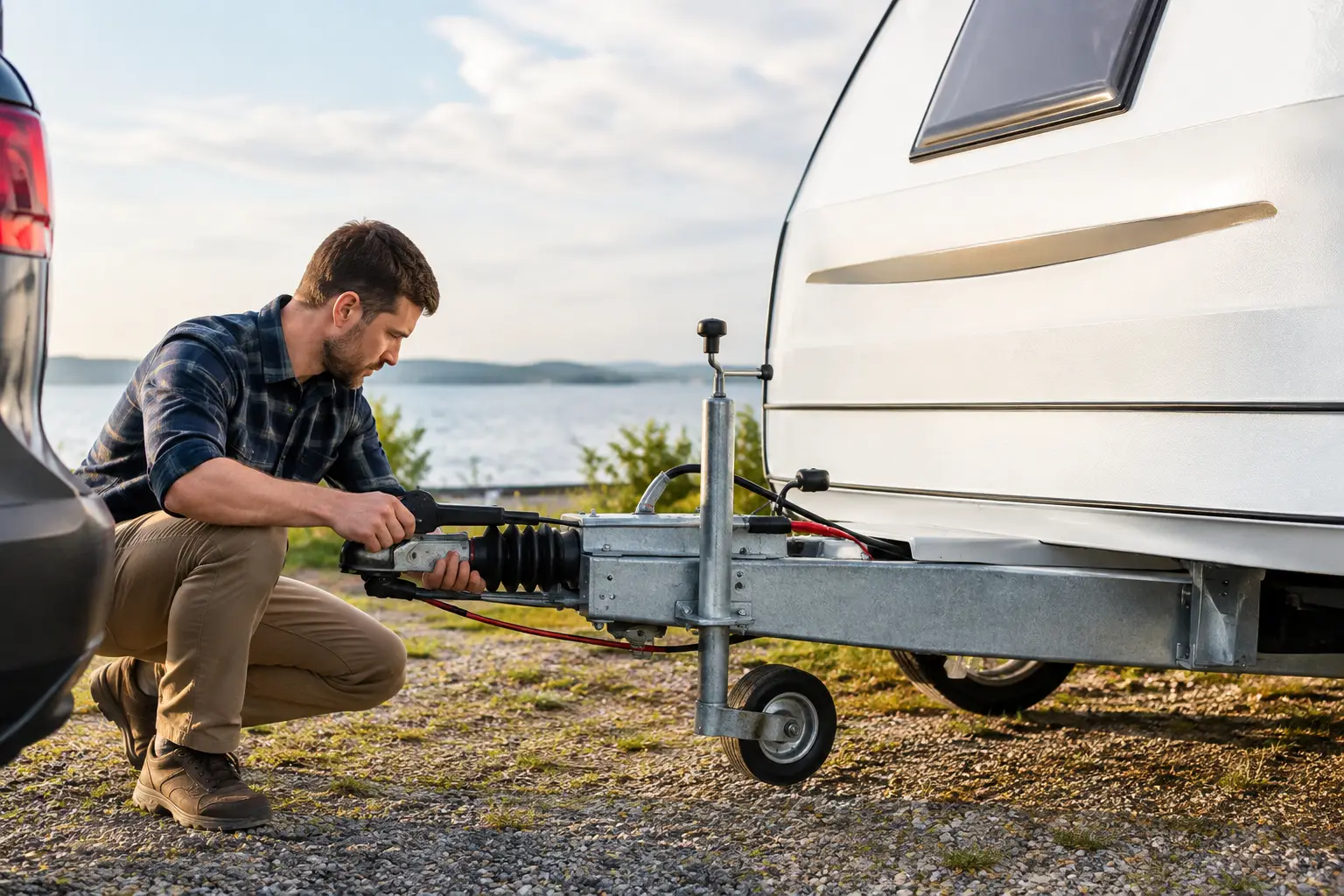
The hitch is the point that keeps your caravan and towing vehicle connected, so it should never be a quick glance-and-go job. Look for corrosion, cracks, excessive wear or damaged moving parts around the coupling head, stabiliser and A-frame.
Operate the hitch mechanism and confirm it locks positively onto the towball. The towball itself should be compatible with the coupling and free from heavy corrosion, damage or anything that could affect grip. If you use a stabiliser hitch, follow its manufacturer guidance on whether the towball should be clean and dry.
Inspect the jockey wheel and clamp. It should wind smoothly, lock securely and not show serious play or damage. Check that the handbrake works firmly and releases properly.
Your breakaway cable is another essential item. It should not be frayed, kinked or dragging on the ground. Attach it correctly to a suitable designated point on the towing vehicle so that, in the unlikely event of a separation, it applies the caravan brakes. Do not simply loop it around the towball unless the vehicle and cable instructions specifically allow it.
Test every road light and electrical connection
A caravan with faulty lights is both unsafe and likely to draw attention for the wrong reasons. Connect the electrics to the towing vehicle and test the indicators, brake lights, rear lights, number plate light, fog light and reversing light where fitted. Check hazard warning lights too.
Ask someone to stand behind the caravan while you operate the vehicle controls. It is the simplest way to spot an intermittent connection or a light that looks dim. Examine the plug, socket and cable for corrosion, cracked insulation or loose pins. Water ingress around rear light clusters is common on older caravans and should be dealt with before it becomes a larger electrical issue.
Make sure the caravan’s number plate is secure, clean and clearly readable. It must display the correct registration for the towing vehicle.
Make sure the brakes and running gear are not being ignored
Caravan brakes can deteriorate quietly, particularly after long storage. Before a journey, check that the handbrake holds the caravan securely on a safe, level area. When towing, pay attention to any pulling, grabbing, unusual noise or hesitation when braking. These are signs to stop and have the system checked.
A proper service should include inspection of brake shoes, drums, cables, bearings, dampers and the overrun mechanism. There is no sensible shortcut here. If servicing is overdue, if the caravan has been stood for years, or if you do not know its history, arrange for a competent caravan workshop to inspect it.
Look underneath where it is safe to do so. Surface rust can be normal on an older chassis, but heavy corrosion, cracked mounting points, damaged floor sections or signs of impact need professional attention. Never crawl under a caravan supported only by a jockey wheel or corner steadies.
Keep weight, loading and towing limits under control
Many towing problems start before the caravan moves. An overloaded caravan is harder to control, places strain on tyres and running gear, and can leave you on the wrong side of the law.
Check the caravan’s weight plate for its limits, then consider what is actually inside. Awning equipment, generators, water containers, bikes and personal belongings add up faster than most owners expect. Keep heavy items low down and close to the axle where possible. Avoid loading everything at the rear, as this can affect stability.
You also need to check the towing vehicle’s limits, towbar rating and your driving licence entitlement. These details vary between vehicles, caravan models and licences, so do not rely on assumptions made years ago. If you have changed cars, upgraded the caravan or fitted extra equipment, check again.
Look for damp and bodywork damage before it worsens
Damp does not usually make a caravan immediately unroadworthy, but it can affect the floor, wall structure, wiring and resale value. Softness around windows, rooflights, lockers, corners and the floor near the entrance is worth investigating. A musty smell, staining, bubbling wallboard or swollen timber can all point to moisture ingress.
Check exterior seals, window rubbers, roof edges, grab handles and awning rails for gaps or failed sealant. Small repairs dealt with early are normally far less expensive than major structural work later on.
Bodywork damage should be assessed honestly too. A cracked panel, damaged locker door or loose trim may be repairable, but it should not be allowed to create sharp edges, water entry points or insecure fittings. If a repair affects lights, the chassis, the A-frame or gas locker, treat it as a priority.
Do not forget gas and interior safety
Before travelling, turn off gas at the cylinder unless an appliance is designed and approved to be used while on the move. Check the gas locker is clean, ventilated and secure, with cylinders properly restrained. Hoses and regulators should be in good condition and replaced in line with their manufacturer guidance.
Inside, secure cupboards, windows, blinds, loose tables and heavy items. A flying kettle or unlocked locker can cause damage even on a short journey. Test smoke and carbon monoxide alarms, and replace batteries where needed. Keep a suitable fire extinguisher or fire blanket accessible, but remember that safety equipment does not replace properly maintained gas and electrical systems.
A practical roadworthiness check before selling
If you are selling an unused caravan, it is tempting to leave it exactly as it stands and let the next owner deal with everything. Sometimes that is the right decision, particularly if the caravan needs significant work and you want a simple, straightforward sale.
Even then, a basic condition check is worthwhile. Gather service records, manuals, keys, ownership documents and details of any known faults. Be clear about damp, tyre age, damage, outstanding finance or repairs that are due. It saves time, avoids misunderstandings and allows a buyer to make a fair offer based on the real condition.
Connors Caravans buys caravans in a wide range of conditions, including older models and units needing attention. You do not need to spend money making every cosmetic issue perfect simply to ask for a valuation. Honest details and clear photographs are usually more useful than a rushed repair that does not address the underlying problem.
Before your next tow or your next sale, give the caravan the same straightforward treatment you would expect from a buyer: check it carefully, be honest about what you find, and get expert help where safety is in question. That approach protects your journey, your time and the value of the caravan you have looked after.