
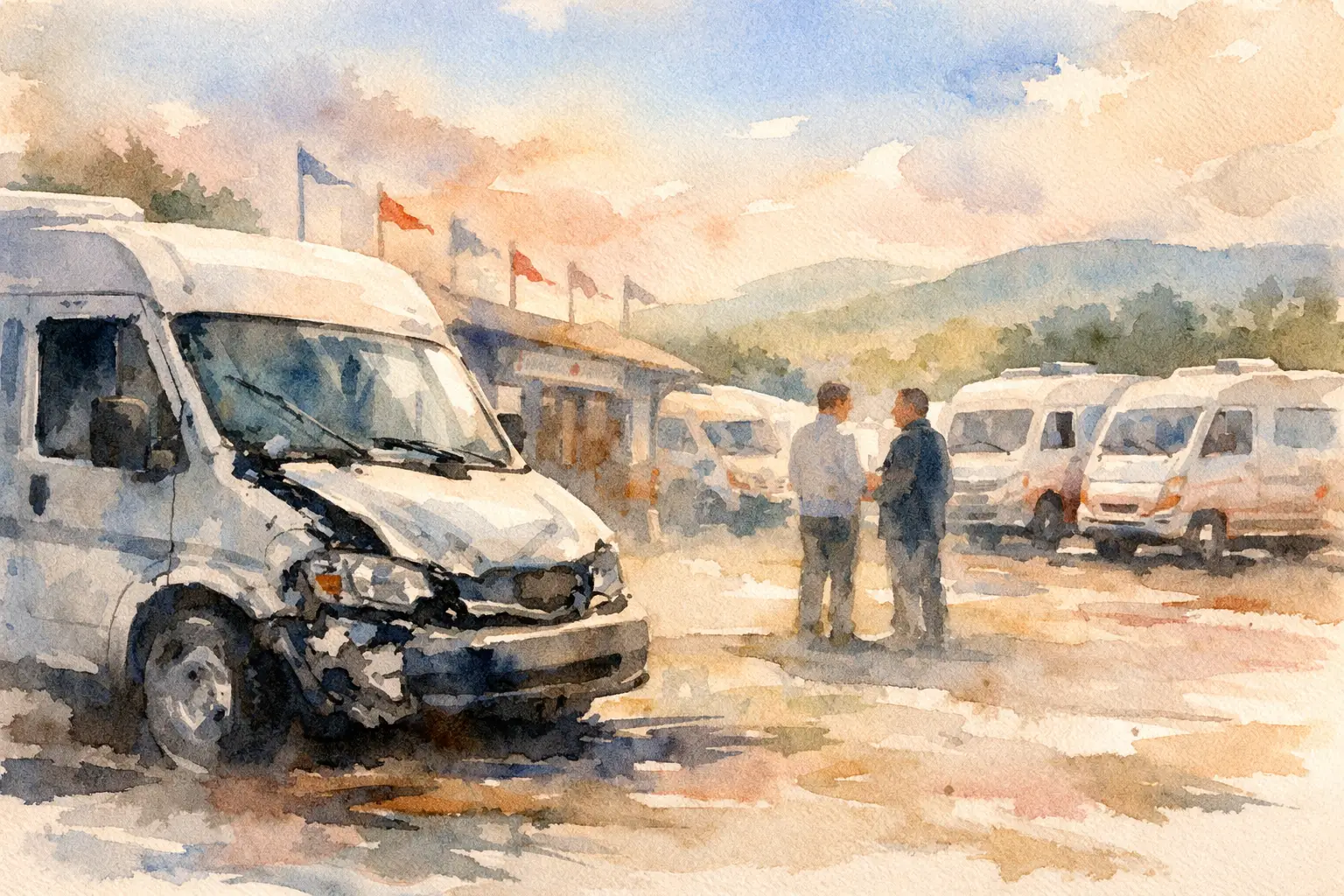
A cracked bumper, damp around a rear corner, a scrape down one side after a tight gatepost – once a campervan is damaged, many owners assume they have missed their chance to sell it properly. The good news is that do dealers buy damaged campervans is not really a yes or no question. The real answer is yes, many do, but the offer depends on the type of damage, the vehicle itself and how easy it is for the buyer to repair, retail or resell.
If you are looking at a damaged campervan on the drive and wondering whether it is worth advertising privately, speaking to a dealer or simply giving up on it, it helps to know how the trade sees these vehicles.
Do dealers buy damaged campervans in practice?
Yes, plenty of dealers and specialist buyers will consider damaged campervans. Some will only take light cosmetic damage. Others will buy vehicles with bodywork issues, water ingress, accident damage, mechanical faults or even outstanding finance. What matters is whether there is still a workable value in the vehicle once the costs and risk are accounted for.
A main dealer taking a part exchange may be far more selective than a specialist buyer. A specialist that deals with used campervans every day is usually better placed to assess non-standard condition, estimate repair costs and make a direct offer quickly. That is often the difference between a flat no and a realistic offer.
This is why owners get mixed answers when they ask around. One buyer may not want the hassle. Another may see a vehicle that still has strong resale demand once repaired. It depends on the van, the damage and the buyer’s business model.
What kinds of damage will a dealer accept?
There is no single rule, but most buyers look at damage in bands. Light cosmetic issues are the easiest. Scratches, dents, small cracks in trim, tired interiors and age-related wear are unlikely to stop a sale on their own. These are common in used leisure vehicles and easy to factor into an offer.
Moderate damage can still be acceptable, but the numbers matter more. That includes panel damage, damaged doors, issues with appliances, cracked windows, soft floor sections, or localised damp. These problems affect resale value and can take time to put right, so the discount is usually more noticeable.
Severe damage is where some dealers walk away and specialists step in. Heavy accident damage, structural issues, extensive damp, flood damage, fire damage or major engine and gearbox faults can still attract interest, but usually only from buyers set up to handle repairs or dispose of stock through trade channels.
The key point is simple. Damaged does not always mean unsellable. It just changes who the right buyer is and how the price is worked out.
How dealers decide what your damaged campervan is worth
When a dealer values a damaged campervan, they are not only looking at what it would fetch on a good day in perfect condition. They are working backwards from a realistic resale figure and then deducting cost, time and risk.
The first factor is the base vehicle. A popular make or layout with strong demand will nearly always attract more interest than an obscure model with limited appeal. Age, mileage, service history and general condition still matter, even if there is visible damage.
The second factor is the damage itself. A dented arch and scuffed bumper are very different from hidden water ingress or accident damage affecting alignment. Cosmetic repairs are easier to price. Damp and structural concerns carry more uncertainty, and uncertainty lowers offers.
The third factor is parts and labour. Some repairs are straightforward. Others involve specialist panels, caravan bodyshop work, sourcing discontinued fittings or replacing expensive appliances. If parts are hard to get, a buyer will be more cautious.
There is also the question of retailability. A dealer may be happy to buy a damaged campervan if they know there is a ready market for it once repaired. If the finished van will still be difficult to sell, that reduces what they can sensibly pay.
Why private selling a damaged campervan is often harder
Some owners naturally think they will get more by selling privately. In certain cases that can be true, but with damaged campervans it is rarely straightforward.
Private buyers tend to be cautious. Many want a vehicle they can use straight away and may be put off by any sign of damp, collision damage or faults with habitation equipment. You can spend weeks answering messages, arranging viewings and explaining the same issue over and over again, only for people to disappear or make unrealistic offers on the driveway.
There is also the matter of trust. Buyers may worry that the visible damage is only part of the story. Even if you are being fully honest, the sale can become slow and awkward. For owners who want certainty, a direct sale to a dealer or specialist buyer is often the simpler route.
Should you repair it before selling?
This is where many owners lose money by guessing.
If the damage is minor and inexpensive to sort, a repair may help the vehicle present better and widen your pool of buyers. A smart cosmetic repair, a replacement light unit or fixing a small trim issue can make sense if the cost is modest.
But bigger repairs are different. Damp work, accident repair, appliance replacement or mechanical jobs can become expensive quickly. You may spend far more than you recover, especially if further issues are uncovered once work starts. In those cases, selling as it stands is often the safer option.
A good rule is to avoid major spending unless you already know the true cost and likely uplift in value. If you do not, get a valuation first. A specialist buyer can tell you whether the repair is worth doing or whether it makes more sense to sell now.
How to get a fair offer on a damaged campervan
The best way to get a fair price is to be clear from the start. Dealers dislike surprises, not because damage is a problem in itself, but because hidden issues waste time and change trust.
Be ready with the registration, make, model, year, mileage and a short description of the damage. Photographs help a lot, especially close-ups of affected areas and wider shots showing the overall condition. If there has been an insurance assessment, repair quote or inspection report, mention it. Service history, habitation checks and proof of ownership all support the valuation as well.
Honesty usually speeds the process up. If a buyer understands the condition before viewing or collecting, they can make a firmer offer and stick to it. If key details only appear at the last minute, the price often changes.
What to expect from the sales process
If you sell to a specialist buyer, the process is usually much simpler than advertising it yourself. You provide the details, receive a valuation, agree the figure and arrange collection or handover. Payment is normally made quickly once everything checks out.
That is particularly useful when the campervan is not roadworthy, has been standing for a while or is awkward to move. For owners in Scotland and across northern England, dealing with a buyer who can arrange collection can save a lot of effort.
Connors Caravans, for example, buys campervans in all sorts of condition, including damaged vehicles and those with finance outstanding. For many sellers, that direct approach is easier than trying to explain faults to a stream of private buyers who may never turn up.
When a dealer may say no
Even though many buyers will consider damaged stock, there are times when a vehicle is simply not viable for a particular dealer. The repair may be uneconomical, the paperwork may be incomplete, or the model may have very limited resale demand.
A refusal does not always mean the campervan has no value. It may just mean that buyer is not the right fit. Specialists, trade buyers and condition-based purchasers all work to different criteria. If one says no, another may still make a sensible offer.
Do dealers buy damaged campervans? Yes – if the deal makes sense
That is the honest answer. Dealers do buy damaged campervans, but they buy on facts rather than hope. Condition, age, repair cost, desirability and risk all feed into the offer.
If your campervan has damage, the main thing is not to assume the worst or spend money blindly trying to put everything right first. Get a proper valuation, be open about the condition and compare the convenience of a direct sale against the effort of selling privately. A damaged campervan can still be sold without stress, and often far more quickly than owners expect.
Sometimes the easiest sale is simply the one where everyone knows exactly what they are looking at from the start.