
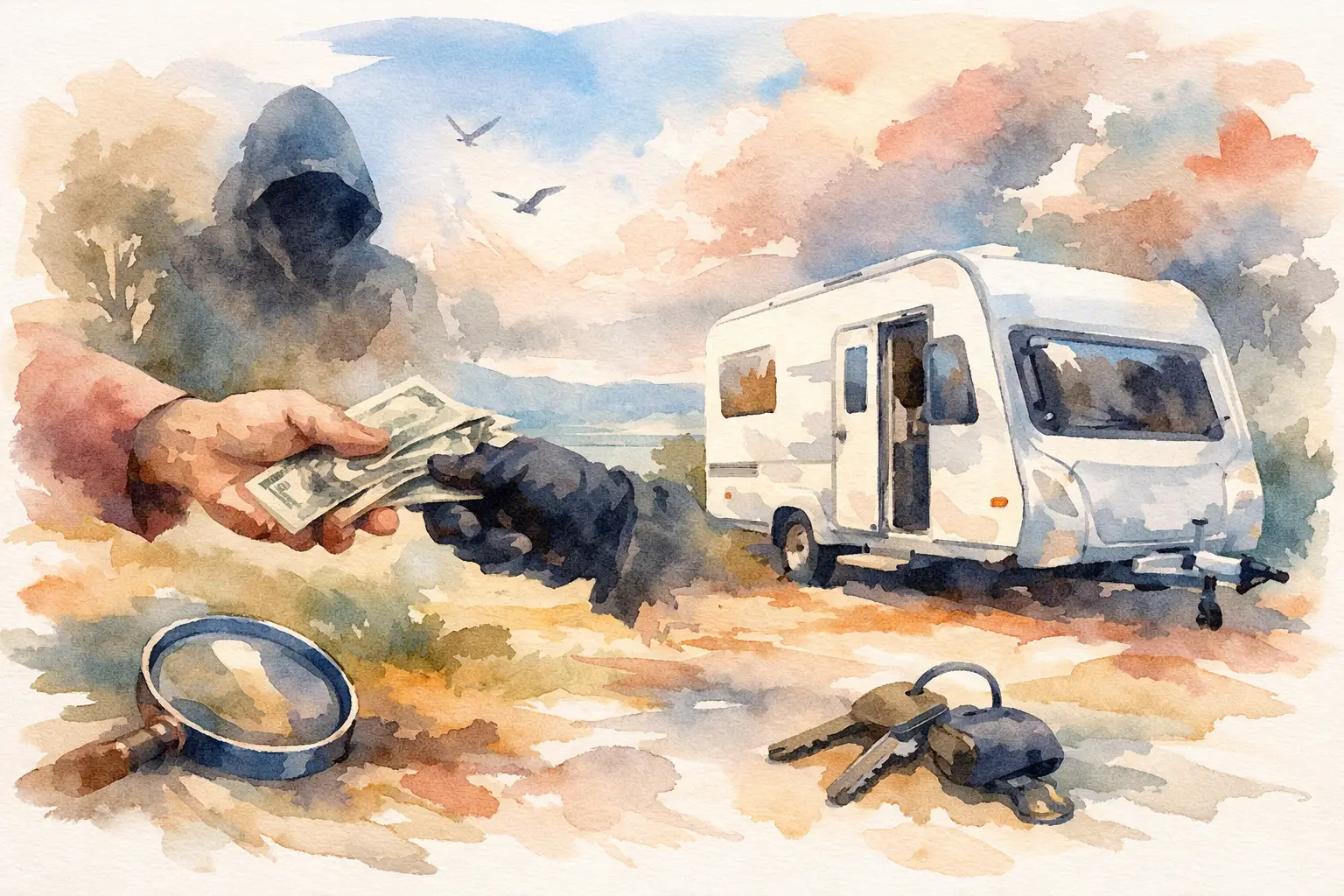
A caravan advertised at a fair price can attract genuine interest within hours. Unfortunately, it can also attract people looking for a quick opportunity to pressure, confuse or deceive a private seller. Knowing how to avoid scams when selling a caravan protects more than the vehicle itself – it protects your money, personal information and peace of mind.
Most caravan scams follow a familiar pattern. The buyer makes an offer that sounds convenient, then introduces urgency, an unusual payment method or a request that leaves you out of pocket. A genuine buyer will understand sensible checks. Anyone who objects to them is giving you a reason to slow down.
The warning signs to take seriously
A scam is not always obvious at the first message. Some fraudsters are polite, knowledgeable and prepared to discuss the caravan in detail. Look at the whole arrangement, not just whether they sound convincing.
Be cautious if a buyer wants to complete the sale without seeing the caravan, unless they are an established direct-buying business with clear details and a proper process. A buyer may reasonably arrange a collection after agreeing a deal, but they should still be willing to verify the caravan, its paperwork and its condition.
Pressure is another common warning sign. This might be a demand to accept payment immediately, release the caravan before your bank confirms the funds, or pay a supposed collection or insurance charge first. A legitimate buyer does not need you to make an upfront payment to buy your caravan.
Poorly explained offers deserve attention too. If someone offers considerably more than your asking price, then asks you to refund the difference or pass money to a third party, walk away. This is a classic overpayment scam. The original payment may later be reversed, leaving you without the caravan and out of pocket.
Avoid scams when selling a caravan privately
Private selling can achieve a strong price, particularly for a clean, well-maintained caravan in demand. The trade-off is that you are responsible for screening enquiries, arranging viewings, handling paperwork and making sure payment is real before the caravan leaves your drive.
Start by keeping your advert clear and accurate. Use recent photographs, describe known faults honestly and state the basic details a genuine buyer needs, including make, model, year, layout and overall condition. Do not publish documents containing your full address, finance account details or the caravan’s complete identification number.
When enquiries arrive, keep communication on the selling platform or through a phone number you are comfortable using at first. Be wary of messages that immediately ask you to move to email or a messaging app, especially if the buyer avoids answering straightforward questions about the caravan. A serious buyer will usually ask about servicing, damp checks, tyres, appliances, ownership and availability.
Arrange viewings safely
Never invite an unknown person to view the caravan when you are alone if it can be avoided. Ask a family member, neighbour or friend to be present, and arrange appointments during daylight hours. Keep valuables, keys and paperwork secure until you are ready to complete a properly agreed sale.
Before allowing anyone to tow the caravan, ask to see suitable identification, a valid driving licence and evidence that their vehicle is insured for towing. You are not being difficult – you are taking normal care with a valuable vehicle. If their behaviour feels rushed, evasive or aggressive, end the viewing.
A genuine buyer may want to inspect the caravan carefully. That is normal. They may also ask for a damp report, service history or an independent inspection. What is not normal is a request for you to hand over keys or documents while they “sort the payment” elsewhere.
Do not rely on a payment screenshot
One of the most damaging mistakes sellers make is accepting a screenshot, email notification or verbal assurance as proof of payment. These can be faked. Only treat payment as complete when you can see cleared funds in your own bank account by logging in through your normal banking app or website.
Bank transfer is often the simplest option, but take your time. Check the amount, account activity and available balance yourself. Do not use a link sent by the buyer to access your bank, and do not share one-time passcodes, security codes or your online banking details. Your bank will not ask you to disclose these to complete a sale.
Cheque payments carry risk because they can be cancelled or returned unpaid after the caravan has gone. Cash may seem straightforward, but large amounts need careful handling, safe counting and a visit to your bank before release. For many private sellers, a verified bank transfer completed while both parties are present is the more practical choice.
If a buyer says their bank has a limit, they can make arrangements in advance or return another day. Their payment problem does not need to become your risk.
Protect your documents and personal details
Your caravan paperwork is valuable. Keep service records, manuals, habitation certificates, receipts and ownership documents together, but do not hand them over until payment has cleared. The V5C registration document should also remain with you until the sale is complete.
It is sensible to prepare a written receipt showing the caravan’s make, model, registration number or VIN where appropriate, agreed price, date, time and the names and addresses of both parties. State that the caravan is sold as seen, subject to the description you have provided. Both parties should sign and keep a copy.
If the caravan has outstanding finance, be open about it from the start. Outstanding finance is not automatically a problem, but it must be dealt with correctly. Ask the finance provider for an up-to-date settlement figure and agree exactly how the balance will be cleared. Never accept a buyer’s word that they will settle it later without evidence and a clear plan.
The same applies if you are selling on behalf of a relative or an estate. Have the authority and relevant documents ready before advertising. Clear paperwork reassures honest buyers and makes it harder for dishonest ones to exploit confusion.
Be careful with collection arrangements
Collection is often where scammers try to create urgency. They may claim a courier is coming, ask you to pay a release fee, or say a transport company needs your bank details before they can collect. None of this should be necessary when you are the seller.
Do not release the caravan to a driver unless payment is cleared and the collection has been agreed directly with the buyer. Record the collection firm’s name, vehicle registration and driver’s details. Photograph the caravan’s condition before it leaves, including any accessories included in the sale.
If the buyer is arranging transport, you do not need to pay their courier, insurance provider or agent. Any request for money to be sent first should stop the sale immediately.
Why a direct buyer can reduce the risk
Selling privately is not wrong, but it is not the best fit for everyone. If you want the highest possible private price and have time to manage enquiries, viewings and negotiation, it may be worth considering. If you would rather have a clear offer, fast payment and an arranged collection, selling directly to a specialist buyer can remove much of the uncertainty.
A reputable buyer should explain how their valuation works, confirm the agreed price before collection and make payment through a transparent method. There should be no hidden charges, no surprise fees for collection and no pressure to make a decision before you are comfortable.
Connors Caravans buys caravans directly from private owners across Scotland and northern England, including vehicles with wear, damage or outstanding finance. The process is designed to be straightforward: provide the details, receive a no-obligation valuation, agree the price and arrange collection once payment and paperwork are in order.
Trust the signs, not the story
The safest caravan sale is rarely the one with the most flattering offer or the most urgent buyer. It is the one where the price is clear, the paperwork makes sense, payment is verified and nobody asks you to take a leap of faith. If anything feels wrong, pause the sale. A genuine buyer will respect that, and the right deal will still be there when everything checks out.