
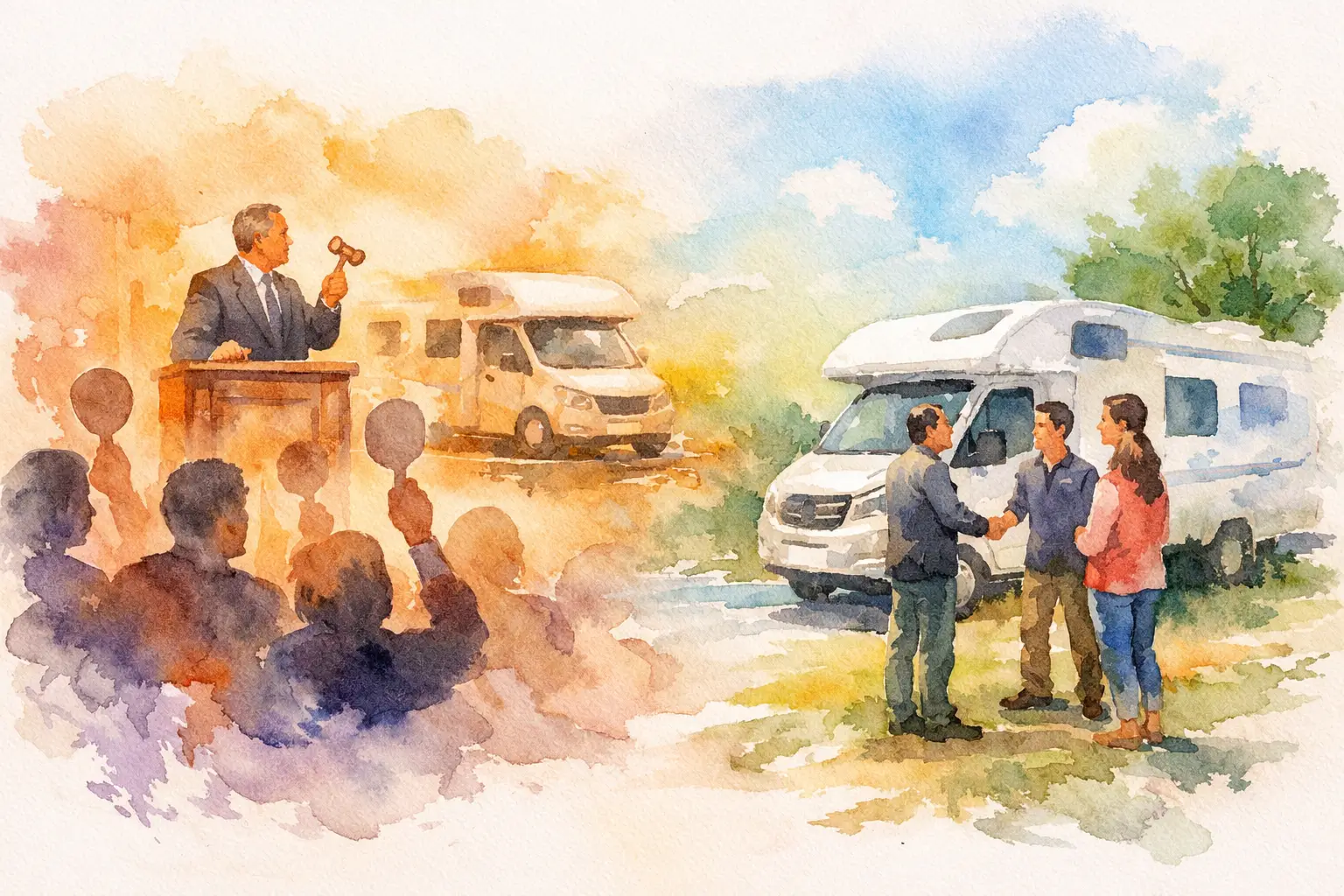
If you are weighing up an auction vs direct motorhome buyer, the real question is usually not just which route gets the highest figure on paper. It is which one gives you the best overall outcome once you factor in fees, delays, uncertainty and the amount of effort involved. For many owners, especially those selling due to a change in circumstances or because the vehicle is simply not getting used, certainty matters just as much as price.
Selling a motorhome is rarely as simple as handing over the keys and collecting the money. Values can vary widely depending on age, mileage, condition, layout, service history and the time of year. That is why it helps to look beyond the headline promises and understand how each option works in practice.
Auction vs direct motorhome buyer – what is the difference?
An auction sale puts your motorhome in front of trade buyers, and sometimes retail bidders, who compete for it on the day. In theory, that can drive the price up. In reality, it can also go the other way if demand is weak, the wrong buyers are in the room, or the vehicle needs more preparation than expected.
A direct motorhome buyer makes you an offer based on the details of the vehicle, its condition and the current market. If you accept, the sale can move ahead quickly, with payment and collection arranged directly. There is no waiting for bidding, no gamble on the day and no need to manage multiple parties.
Neither route is automatically right for everyone. The best option depends on what you value most – maximum possible upside, or a faster and more predictable sale.
When auction can work well
An auction can suit owners with a desirable vehicle in strong condition, especially if it is a popular make or layout and the market is active. If there is genuine buyer competition, you may achieve a strong result.
It can also appeal if you are comfortable with some uncertainty and do not mind the sale process taking a bit longer. Some sellers enjoy the idea of testing the open market and seeing what bids come in.
That said, auction prices are not guaranteed. A vehicle is only worth what bidders are prepared to pay on that day. Even a good motorhome can underperform if demand is slow, weather affects attendance or buyers are cautious.
There is also the issue of fees. Auction houses typically charge entry fees, seller fees and sometimes extra costs for listing, storage or valeting. A strong hammer price can look less attractive once those deductions are taken off.
Why many owners prefer a direct motorhome buyer
A direct buyer is usually the better fit for people who want to sell with as little hassle as possible. You provide the details, receive an offer and, if it works for you, the sale can be completed quickly. That simplicity is often the main reason owners choose this route.
It is particularly useful when time matters. If you need funds released quickly, you are stopping touring, dealing with a bereavement, relocating, or simply want the vehicle gone before more standing costs build up, a direct sale can remove weeks of uncertainty.
It also helps if the motorhome is not perfect. Some auction buyers will still bid on vehicles with cosmetic wear, damp issues, body damage or outstanding finance, but these factors can affect confidence and bidding levels. A specialist direct buyer is often in a better position to assess the vehicle fairly and make a clear offer without the drama of an auction room.
For sellers in Scotland and the north of England, this can be even more practical if collection is arranged for you. Instead of organising transport to an auction site or worrying about getting the motorhome there, the process is handled directly.
Price is not just the top bid
This is where many comparisons go wrong. Sellers often look at the best-case auction figure and compare it with a direct offer, but that is not a like-for-like comparison.
With auction, you need to consider seller commission, transport costs, possible cleaning or prep work, time spent waiting for a sale date and the risk that the reserve is not met. If the motorhome does not sell, you may have to relist it, reduce expectations or pay additional charges.
With a direct buyer, the offer is usually much clearer. You know what is being paid, when payment will be made and what happens next. There is less room for hidden surprises if the valuation process is straightforward and transparent.
That does not always mean the direct offer will be higher. Sometimes auction can outperform it. But many owners find that once they strip out the costs and uncertainty, the gap is smaller than expected.
Time, effort and stress matter more than people think
Motorhome owners often underestimate how much admin is involved in selling. An auction may sound hands-off, but you still need to submit paperwork, arrange delivery, meet any listing requirements and wait for the sale date. If there are questions afterwards or the vehicle does not sell, the process drags on.
A direct buyer reduces that burden. The steps are usually simple: share the registration and details, receive a valuation, agree the price, then arrange payment and collection. That is especially useful for older owners, busy families or anyone who does not want strangers inspecting the vehicle on the driveway.
There is also peace of mind in dealing with one specialist business rather than an unknown mix of bidders. A professional buyer should explain the process clearly, confirm any checks in advance and avoid last-minute haggling if the vehicle matches the description you have given.
Condition changes the equation
If your motorhome is nearly new, very tidy and in a sought-after specification, auction may be worth considering. Buyers are often more confident when a vehicle presents well, has strong history and needs little or no remedial work.
If it has faults, age-related wear or damage, a direct buyer often makes more sense. Auctions can be unforgiving when a vehicle is less than ideal. Buyers factor in risk quickly, and bids can fall sharply if there are concerns about damp, bodywork, tyres, habitation issues or missing paperwork.
A specialist direct buyer is usually more realistic about these issues. They know older and imperfect motorhomes still have value, and they will often buy vehicles that private buyers or auction bidders approach cautiously. That can make the sale far easier and more predictable.
Outstanding finance and awkward situations
Another area where direct buyers can be useful is when there is outstanding finance. This can put off private buyers and complicate an auction sale, particularly if the paperwork is not clear or the settlement needs handling carefully.
A professional buyer who deals with these situations regularly can explain what is owed, how settlement is arranged and what balance is left for you. The same applies if the vehicle has been off the road, is part exchange stock you no longer want to keep, or belongs to a family member whose affairs need sorting promptly.
These are not unusual cases. They are simply situations where speed and clarity matter more than trying to squeeze out the absolute top figure.
How to decide which route suits you
If you are still comparing auction vs direct motorhome buyer options, ask yourself a few practical questions. Do you need a sale quickly, or can you wait? Are you comfortable with a price that may rise or fall on the day? Is the motorhome in strong saleable condition, or does it have issues that might put bidders off? How much effort do you want to put in?
If your priority is testing the market and you are happy to accept the uncertainty, auction may be worth exploring. If your priority is a fair offer, fast payment and a straightforward process, a direct buyer is usually the better route.
That is why many sellers choose specialists such as Connors Caravans. A direct valuation, quick decision and arranged collection suit owners who want certainty without the back and forth.
What a fair direct sale should look like
Not all buyers operate to the same standard, so it is worth knowing what good service looks like. The process should be clear from the start. You should know what information is needed, whether the offer is subject to inspection and when payment will be made.
A fair buyer will also be realistic. They will not promise an inflated figure just to secure your enquiry, only to knock it down later. They will ask sensible questions about condition, service history and finance, then explain the offer in plain English.
Most importantly, you should feel that the deal is straightforward. No hidden fees, no pressure and no confusion about collection or payment.
If selling your motorhome has been sitting on your to-do list for months, the best option is usually the one that gives you a result you can trust and a process you do not have to wrestle with.